
Reviewed October 18, 2026. Market data describes the stated geography and period. Payment illustrations are not quotes.
Start with a quote, not an average
A house can fit the asking-price budget and fail the insurance budget. Before committing, get written quotes for the exact address, with the coverage and deductibles you need.
Ask the seller for roof records, permits, inspection reports and known repairs. Give the insurer accurate information. A statewide premium average cannot tell you what a particular house will cost to insure.
Compare dwelling limits, replacement-cost terms, exclusions, deductibles and effective dates alongside the premium. A cheaper quote with a larger exposure after a loss may be a poor fit.
Work backward from your contract deadlines. Do not assume a quote is bound coverage or that your contract automatically gives you a right to cancel over insurance.
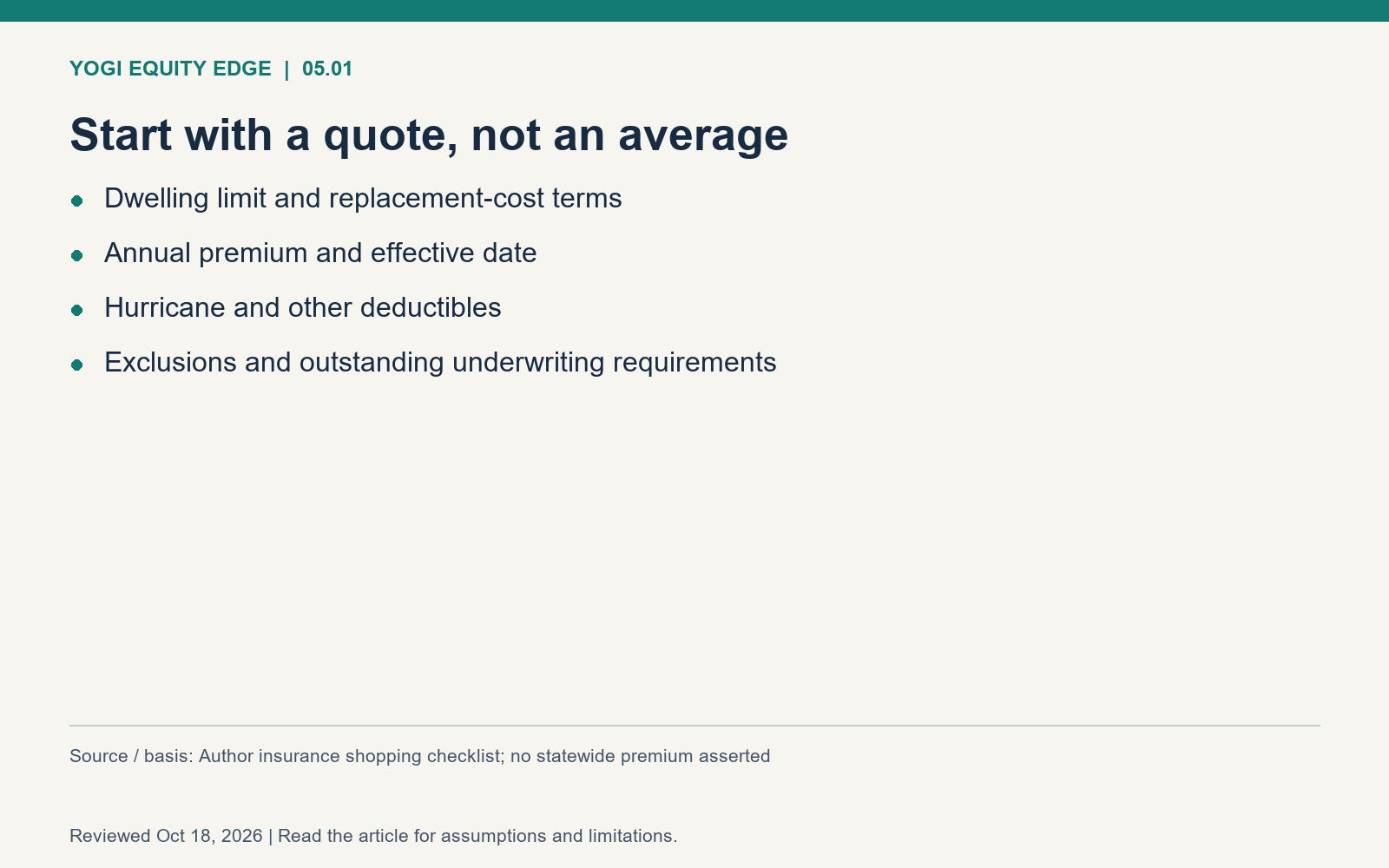
Compare written coverage terms for the exact address.
Roof age is not an automatic cutoff
Florida’s Department of Financial Services explains that an insurer cannot refuse issuance or renewal solely because a roof is under 15 years old. For a roof 15 or older, it must allow an authorized inspection before requiring replacement; if that inspection finds at least five years of useful life, age alone cannot be the reason for refusal. Florida DFS roof-age guidance.
That protection does not make a damaged roof acceptable or guarantee that a whole property qualifies. Condition and other underwriting issues still matter. Get the insurer’s requirements in writing and price any needed repairs.
Citizens separately publishes older-roof documentation thresholds: more than 25 years for soft roofs such as shingles, or more than 50 years for hard roofs such as tile or metal, with documentation of at least five remaining useful years. Citizens inspection requirements.
Do not turn an informal age rule into a replacement budget without a condition assessment.
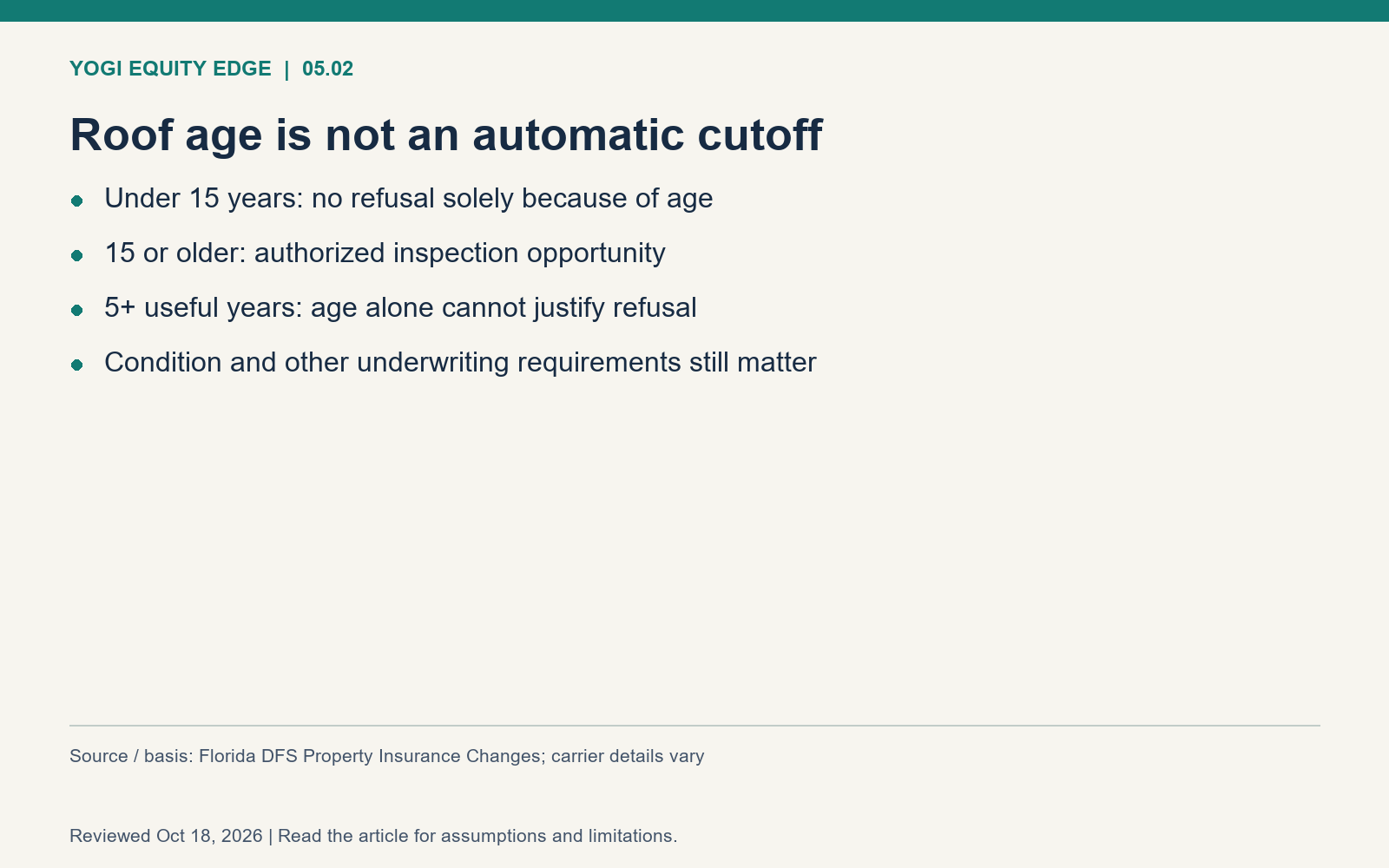
Florida protects against roof age alone being used as the reason for refusal.
The four-point inspection
A four-point report examines roof, electrical, plumbing and HVAC for insurance underwriting. It serves a different purpose from a full home inspection.
Citizens requires a four-point for applications on homes more than 20 years old. Private insurers can set different requirements. Ask the licensed insurance agent which report and version the carrier accepts before booking. Citizens requirements.
Get an inspection price and ask what the visit includes. Order needed reports early enough to request repairs, compare coverage or make a contract decision before the applicable deadline.
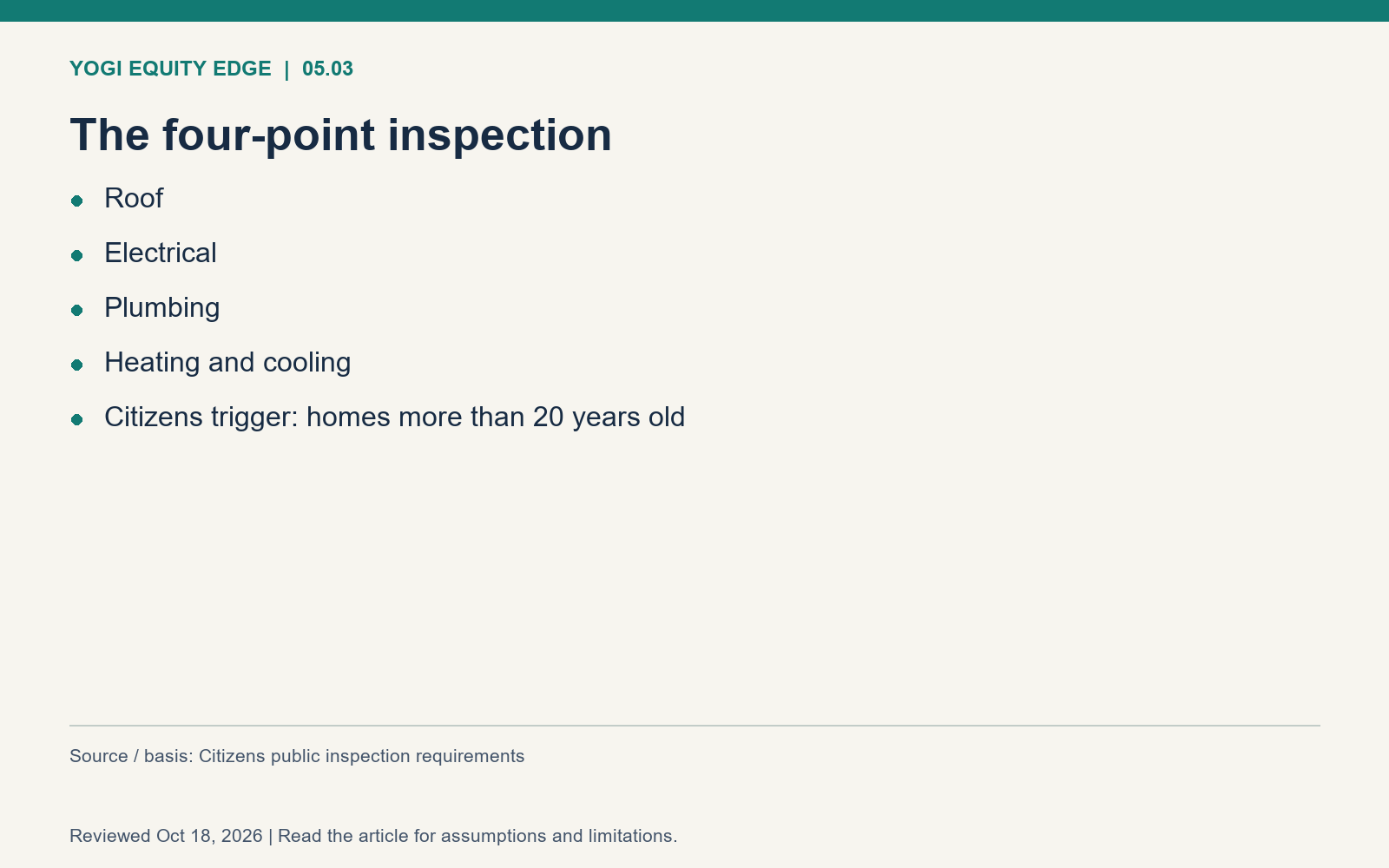
A four-point is an insurance report, separate from a full inspection.
What the underwriter needs to know
Citizens updated its four-point and roof forms in March 2025. Its notice highlights documentation of single-strand aluminum wiring remediation by a licensed electrician, added plumbing information and further roof-leak detail. Citizens form update.
An old panel or pipe type should prompt questions, not a diagnosis from the year built. Have the relevant licensed professional identify the condition and price the work. Ask the insurer whether the repair must be completed before binding and what proof it requires.
If a seller offers a credit, check that it solves the actual problem. A closing credit is little help if the insurer requires completed work before closing.
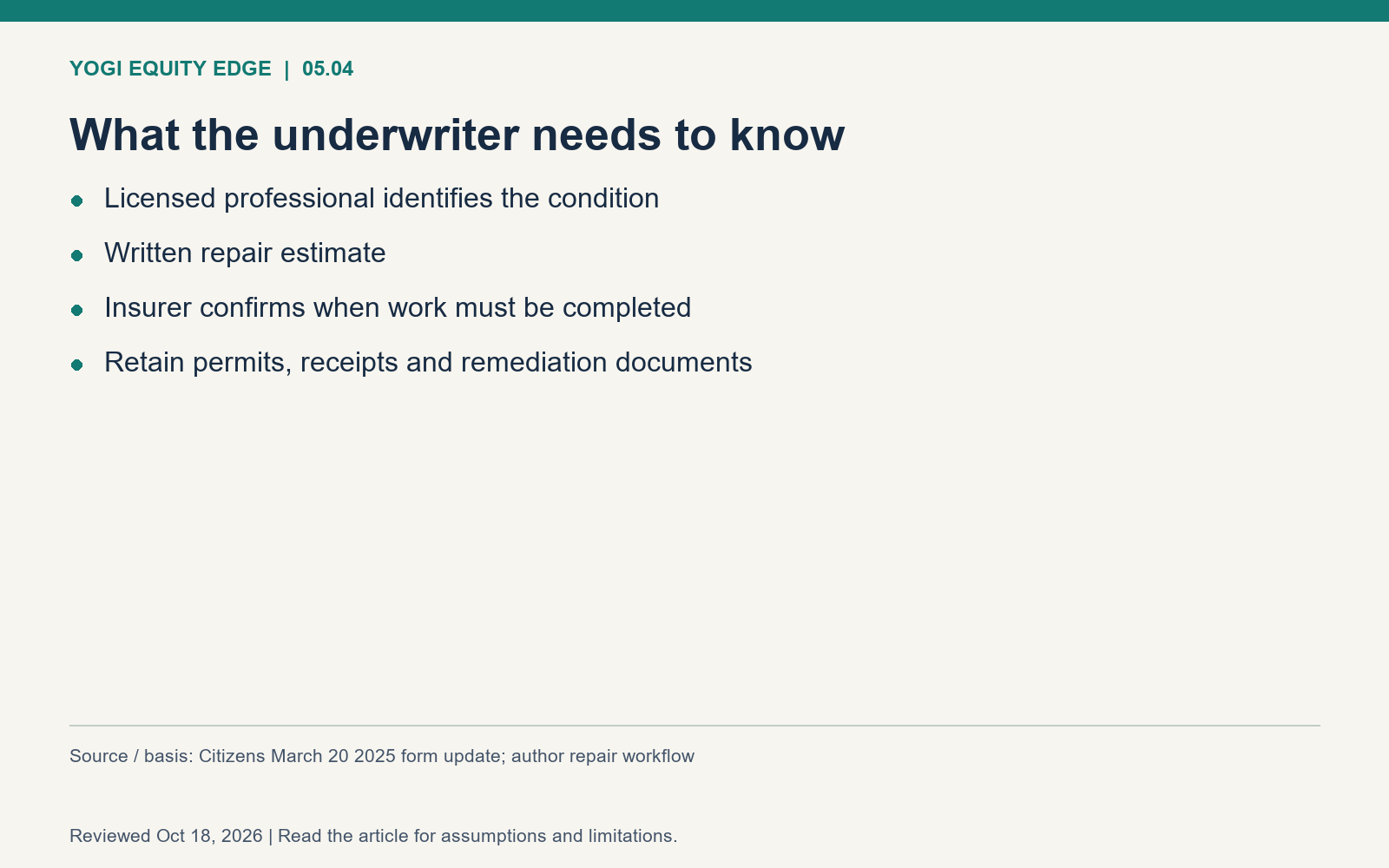
Get the defect, repair requirement and evidence needed in writing.
Wind features and deductibles
Citizens says a wind mitigation inspection can document features that may qualify for premium discounts. The saving depends on the property and insurer; do not assume the report will pay for itself. Citizens mitigation information.
Ask your agent which current form is accepted, what documents support a credit and whether attic access is needed. Then compare the quote using verified features. Do not assume an old report still describes the house after changes.
Ask for every deductible in dollars as well as percentages. For example, a 5% deductible on a $400,000 dwelling limit is $20,000. That is a hypothetical calculation, not a promise of the options on your policy.
Ask separately about flood coverage and any waiting period. Do not assume the homeowners quote includes every water-related loss. Have the agent explain the actual wording and effective date.
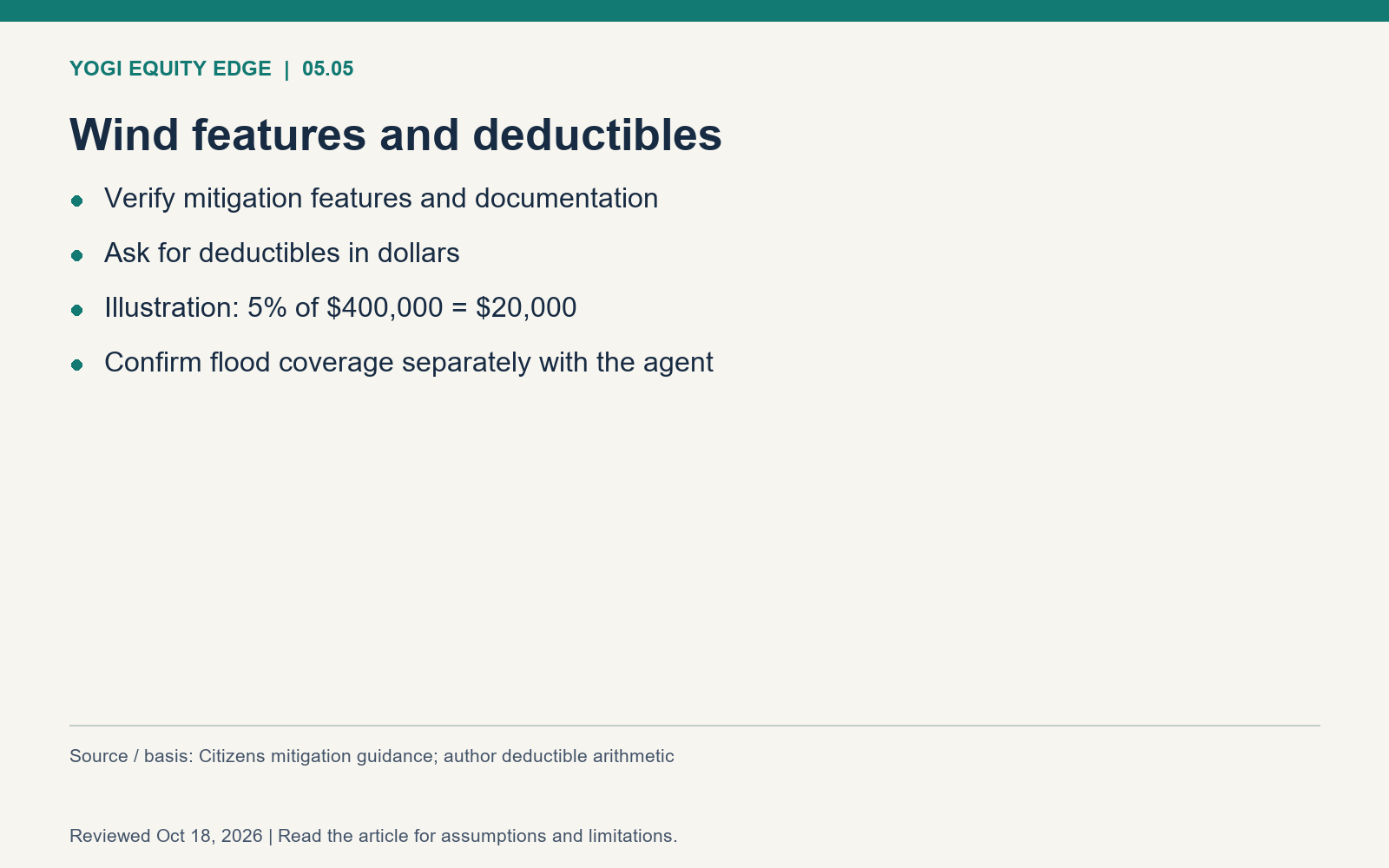
A lower premium is useful only if the coverage and deductible fit your reserve.
Before the contract deadline
Request quotes as early as practical. Give each agent the same property facts and coverage request so the comparisons mean something.
Read exclusions and outstanding conditions. Decide who will complete required work, when it will happen and how it will be documented. Ask the lender to confirm that coverage meets its requirements.
Have your real estate professional or attorney explain the contract’s insurance and inspection provisions. Deadlines, cancellation rights and repair obligations come from the agreement and applicable law; do not assume an automatic escape route.
Keep enough cash for the premium, deductible and repairs. If those costs make ownership uncomfortable, change the price, the work or the property before committing.
Send me the property you are considering. We can identify the records and insurance questions to resolve before you spend more on the purchase.
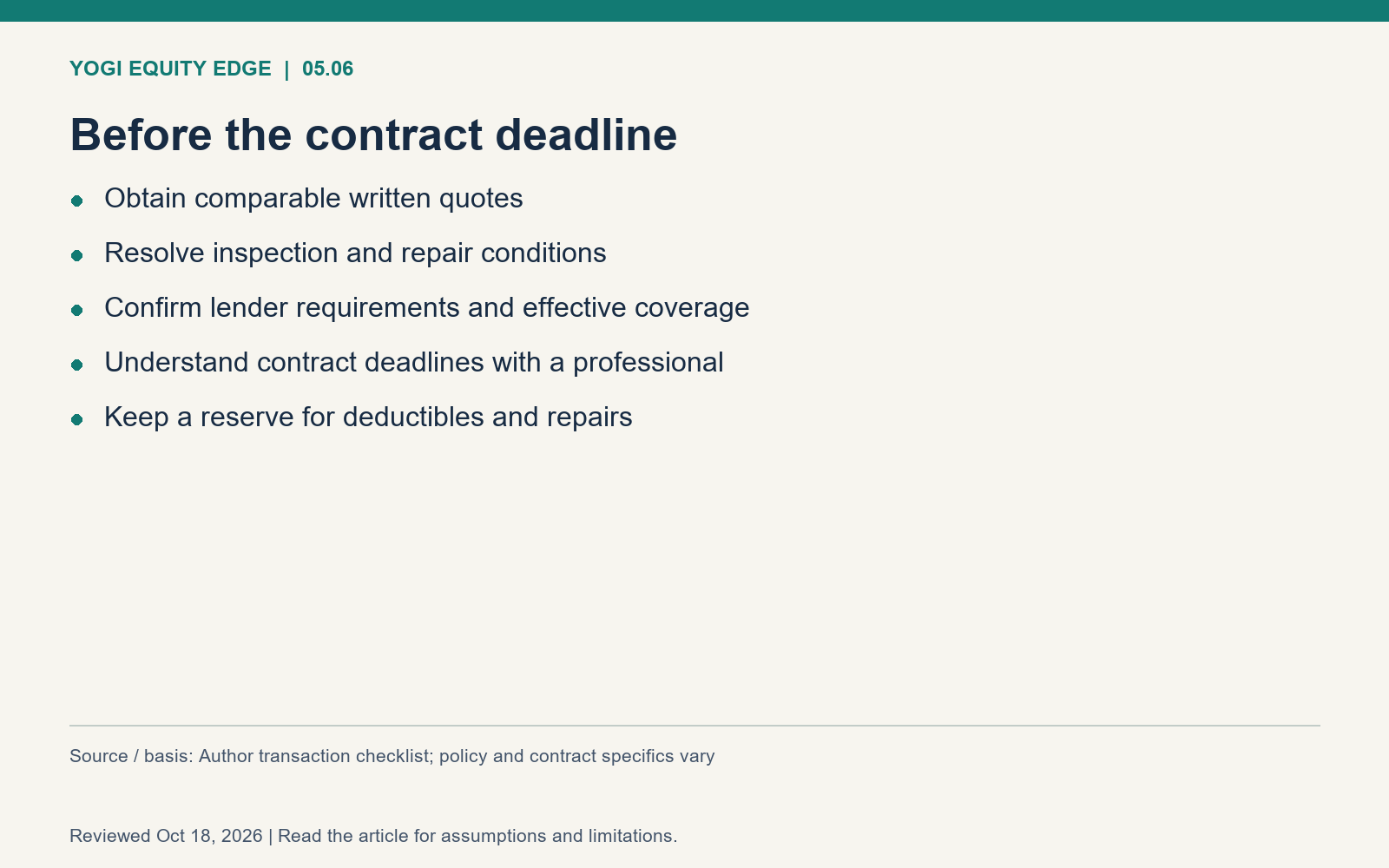
Finish the insurance work before the decision deadline.
General educational information. Verify property, loan, insurance and contract details with the appropriate licensed professional.
Yogi Ganeshram | Real Estate Agent, eXp Realty LLC
yogi@orlandosgreatesthomes.com | (321) 217-4220