
Two homes can have the same price and very different monthly bills. Before choosing between them, put the mortgage, association dues and district assessments in the same budget.
Here is a hypothetical comparison: a $450,000 purchase, 10% down and a 30-year fixed loan at 7.40%. Principal and interest is $2,804 a month. That rate matches Freddie Mac’s October 15, 2026 survey; it is a national average, not your loan quote. The original graphic cites October 8, when the average was also 7.40%.
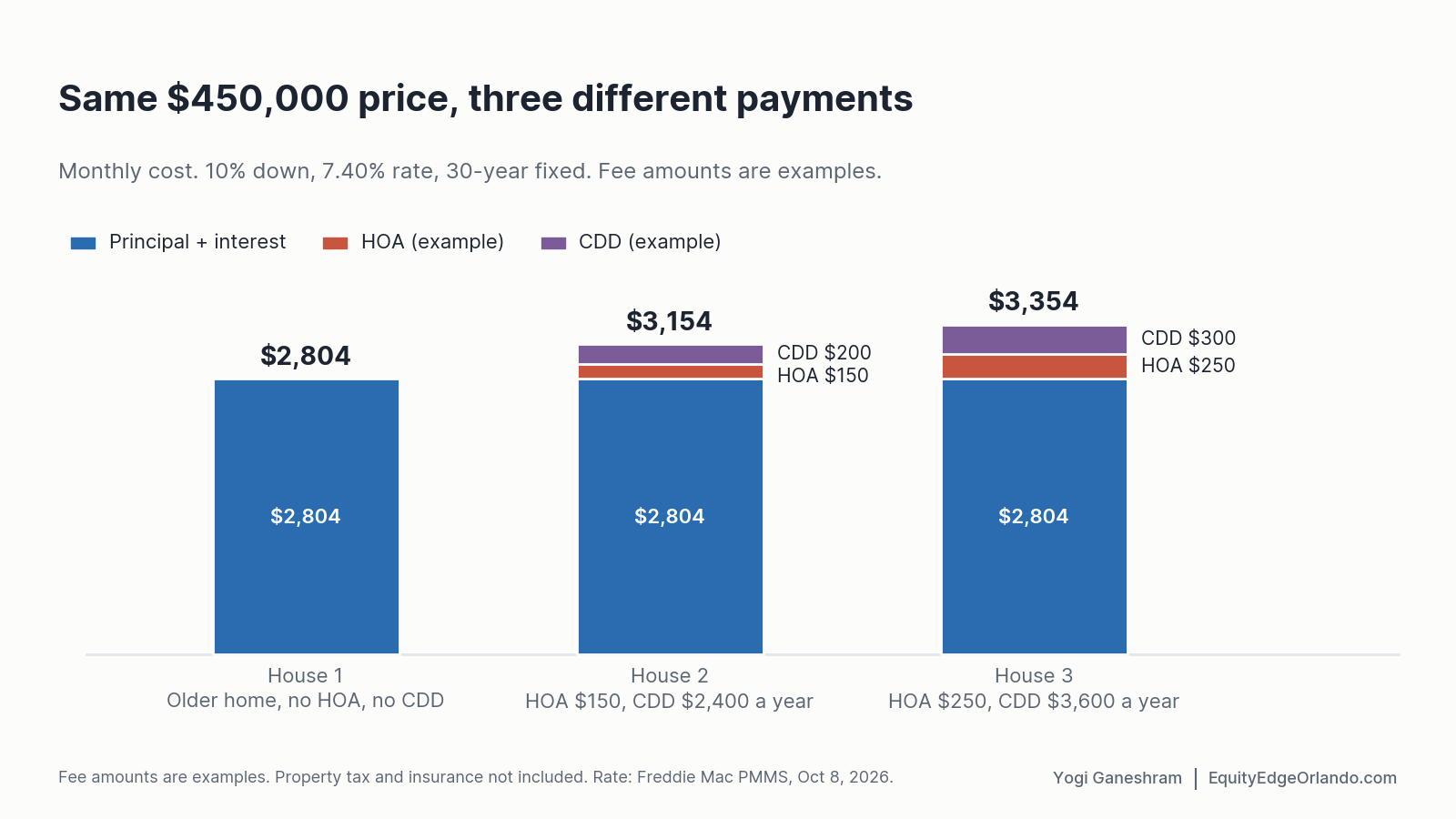
The second house adds a hypothetical $150 monthly HOA fee and $2,400 annual CDD assessment, bringing this subtotal to $3,154. The third adds $250 and $3,600 respectively, bringing it to $3,354. These are example fees, not local averages.
These subtotals exclude property tax, homeowners and flood insurance, mortgage insurance, maintenance, utilities and closing costs. With 10% down, ask your lender about mortgage insurance. The CFPB Loan Estimate guide explains where to check escrow and costs paid separately.
What an HOA is
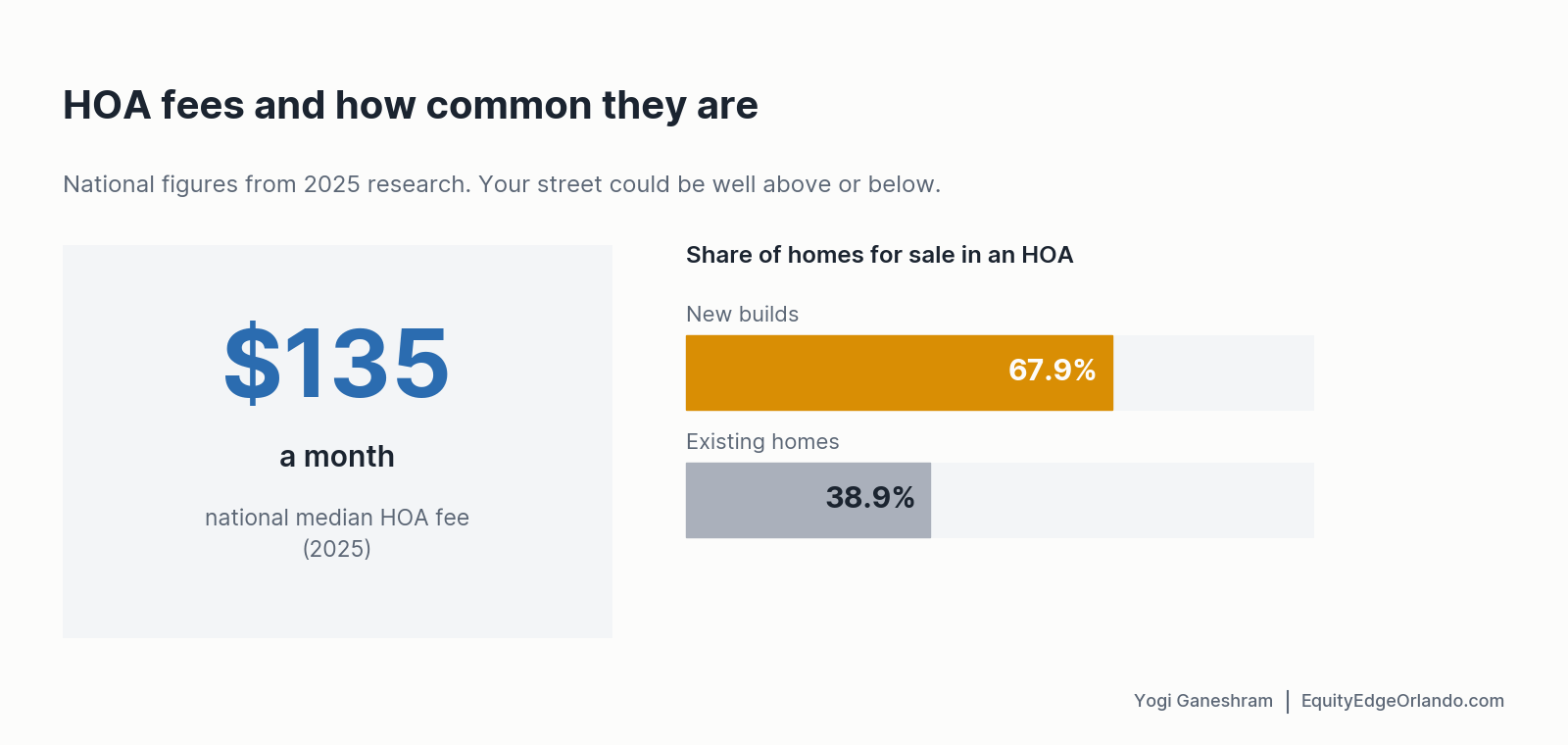
The graphic summarizes Realtor.com’s institutional research on 2025 for-sale listings. The $135 median includes only listings reporting a nonzero fee. The 67.9% and 38.9% figures refer to new-build and existing listings respectively. They do not describe every American home or establish Orlando dues.
A homeowners association is a private association. Florida’s Chapter 720 definition covers communities with mandatory parcel-owner membership and assessment authority; condominium associations have a separate framework. Ask what your dues cover and which responsibilities stay with you.
Request the current budget, reserve information, assessment notices and governing documents. Check rental limits, parking and renovation approvals against your intended use. A low fee alone tells you little about future costs.
What a CDD is
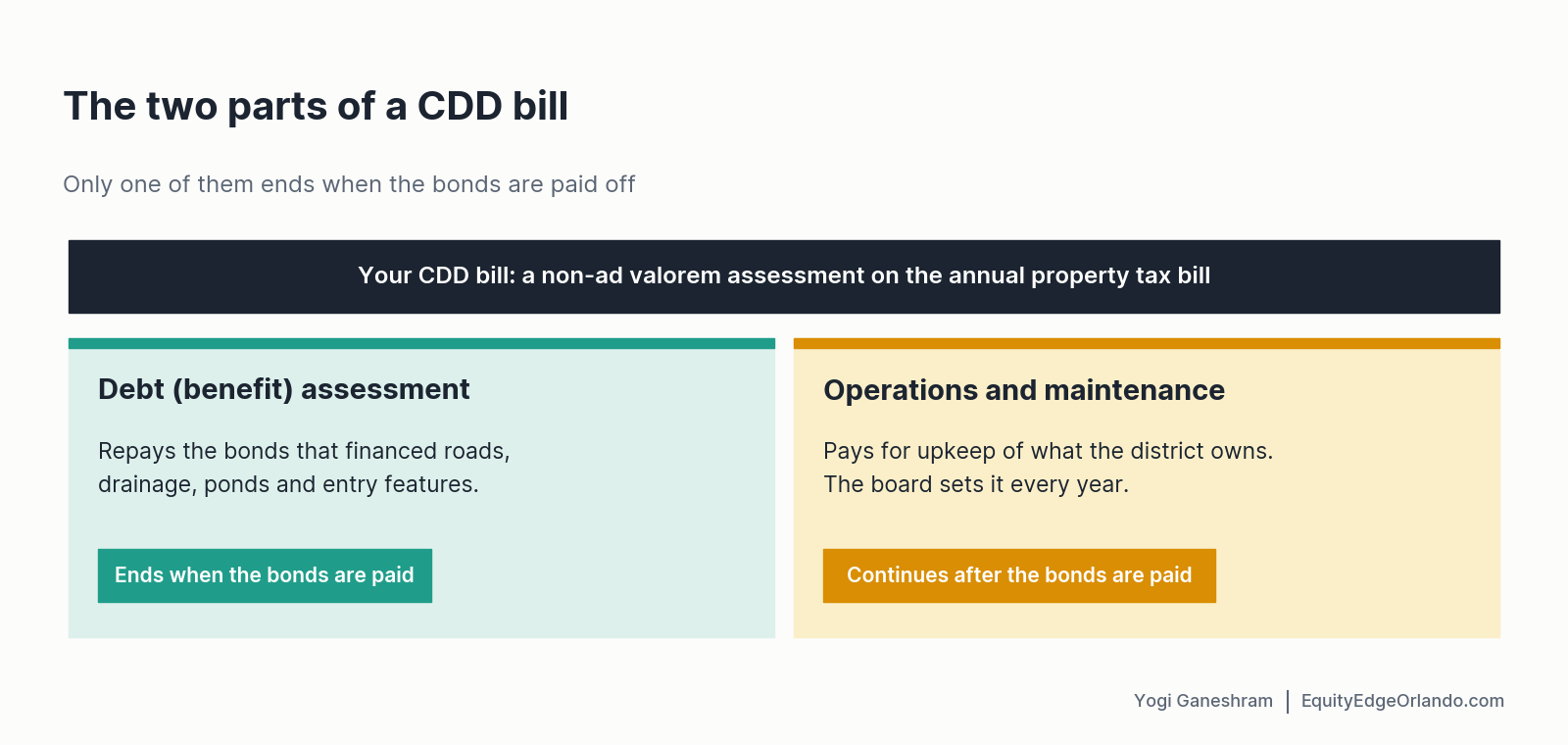
A community development district is a special-purpose local government under Florida Chapter 190. It can finance infrastructure and its upkeep. Its non-ad valorem assessments can appear on the county property tax bill; other lawful collection methods are possible.
The graphic simplifies two common components: debt service for existing bonds and ongoing operations and maintenance. Ask for the parcel’s actual schedule and bond payoff information. Paying off current debt does not end maintenance charges or prevent a future lawful obligation. A bill need not have both components.
The difference in plain English
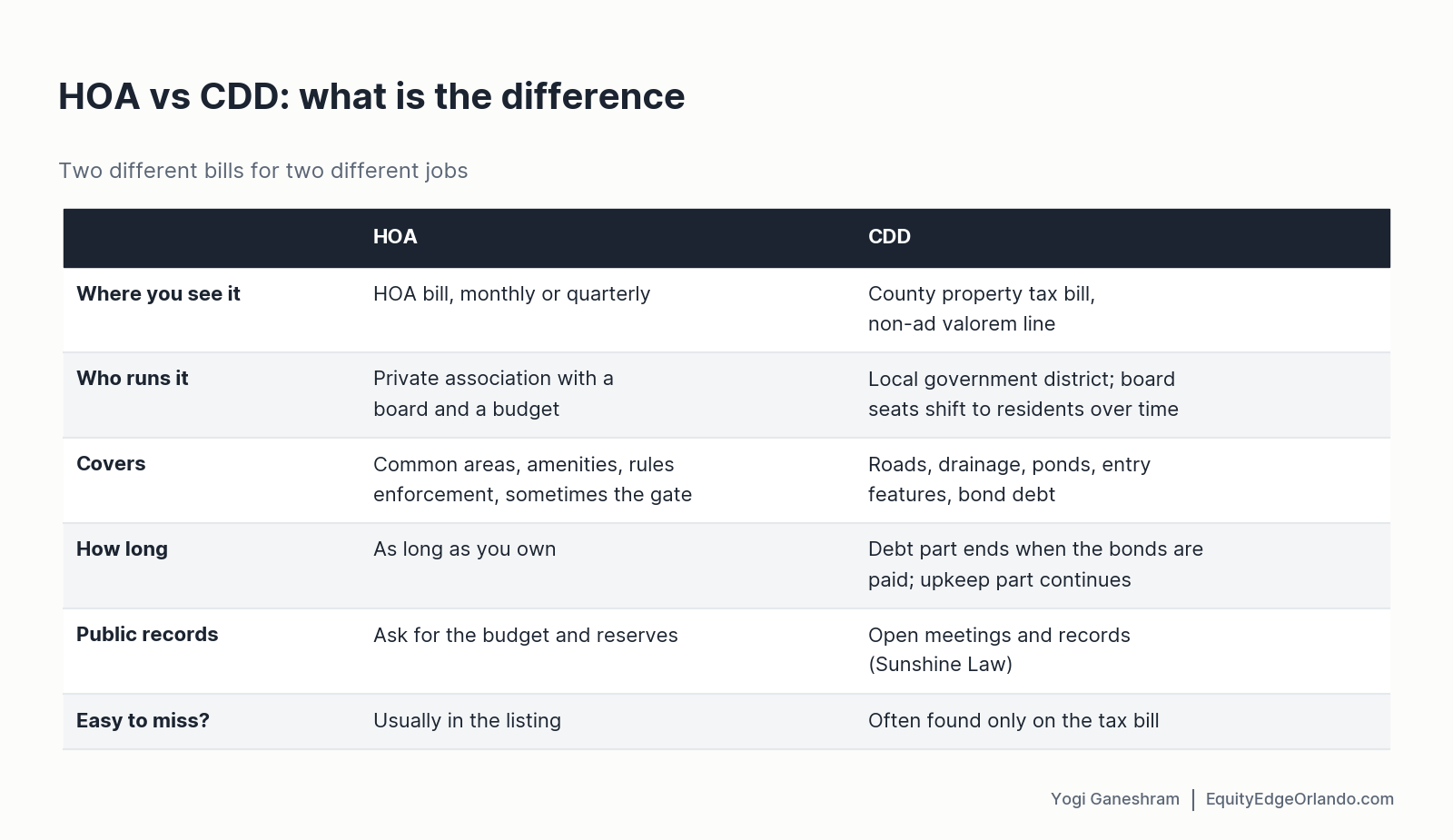
You can have an HOA, a CDD, both or neither. Confirm the parcel rather than assuming the neighborhood name settles it. The comparison graphic describes common arrangements, not every collection schedule or service.
Under section 190.006, CDD board meetings are public and records are available for inspection. Transition from landowner voting to qualified-elector voting depends on statutory timing and voter thresholds. It does not happen on a single date for every district.
What it costs over time
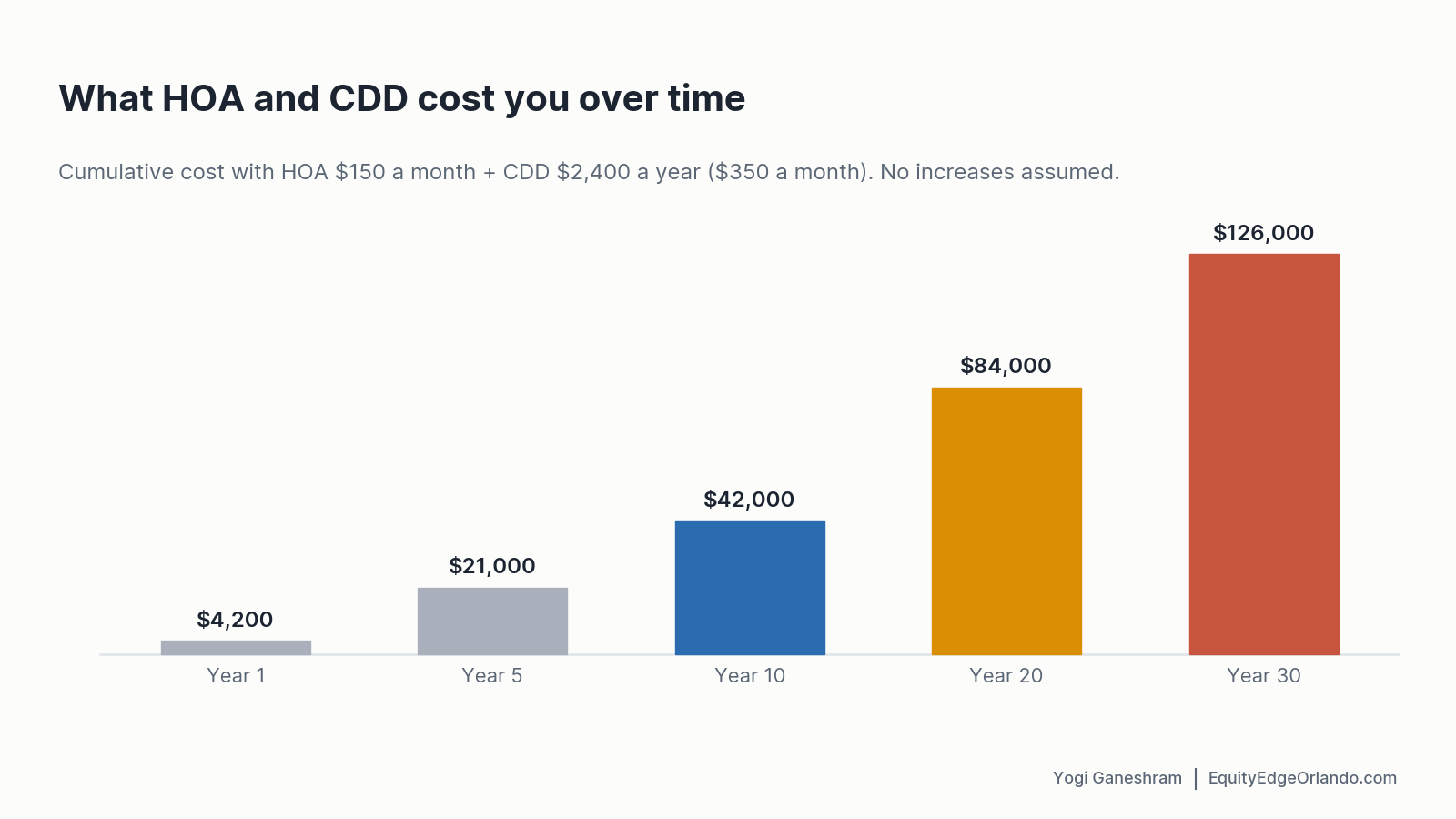
The calculation is $350 × 12 × 10 = $42,000. Extending the same unchanged payment to 30 years gives $126,000. This is a flat-cost illustration, not a forecast or minimum. Dues can change, existing debt may end and new assessments may arise. Read the actual schedule before projecting decades of payments.
How to protect your budget
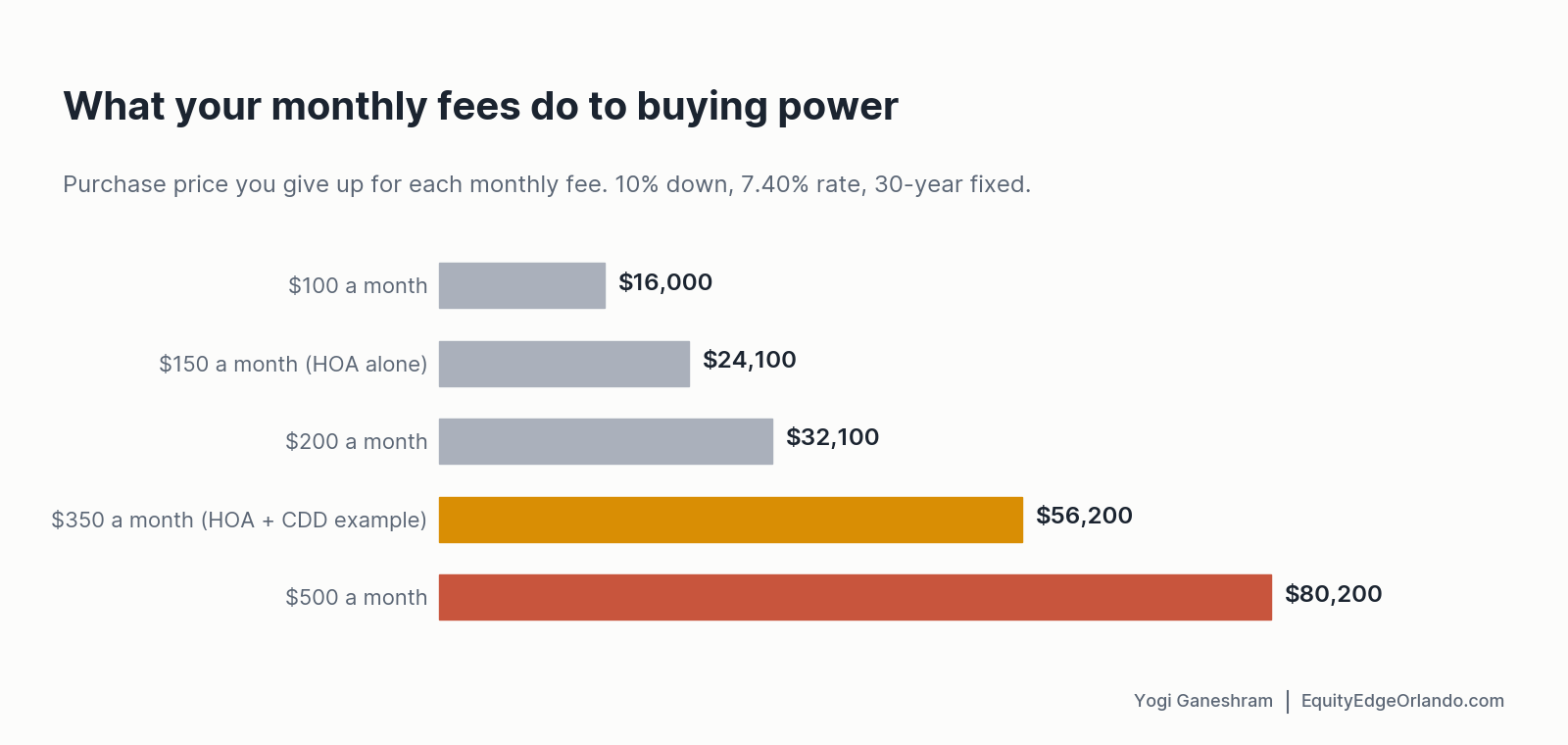
At the same 7.40% rate, 30-year term and 10% down, $350 a month supports about $50,550 of loan principal, equivalent to about $56,167 of purchase price. The graphic rounds to $56,200. This isolates principal and interest; it holds other costs constant and is not a lender’s qualification decision.
Build a full budget using your Loan Estimate, actual insurance quotes, estimated taxes for your ownership circumstances, association dues and district charges. If the lender’s tax escrow already includes the CDD, do not count it twice. Add maintenance and known repairs separately.
For a resale, the seller’s tax bill may reflect exemptions and assessment limits that do not transfer. Florida’s homestead assessment statute generally requires reassessment at just value the January after a change of ownership, subject to exceptions. Ask the property appraiser for an estimate. For a new home, confirm that the estimate includes the completed structure.
Before committing, get the current dues and assessments in writing, identify pending special assessments, separate bond debt from maintenance and ask who maintains the roof and exterior. Have an attorney or title professional resolve unclear obligations.
Comparing two homes? Send me their listing addresses and your budget. We can compare the ownership costs before you decide.
Yogi Ganeshram | Real Estate Agent, eXp Realty LLC
yogi@orlandosgreatesthomes.com | (321) 217-4220
Orlando’s Greatest Homes | Equity Edge Orlando
Reviewed October 18, 2026. Educational information; confirm legal, tax, insurance and financing questions for your property. Calculations are hypothetical and rounded.