
A move to Orlando has two schedules: getting into the home and getting your paperwork and routines in order. Plan both before the moving truck arrives.
Use this as an organizing checklist. Your circumstances, property and county determine the exact documents and services you need, so confirm requirements with the responsible agency.
Before closing or moving day
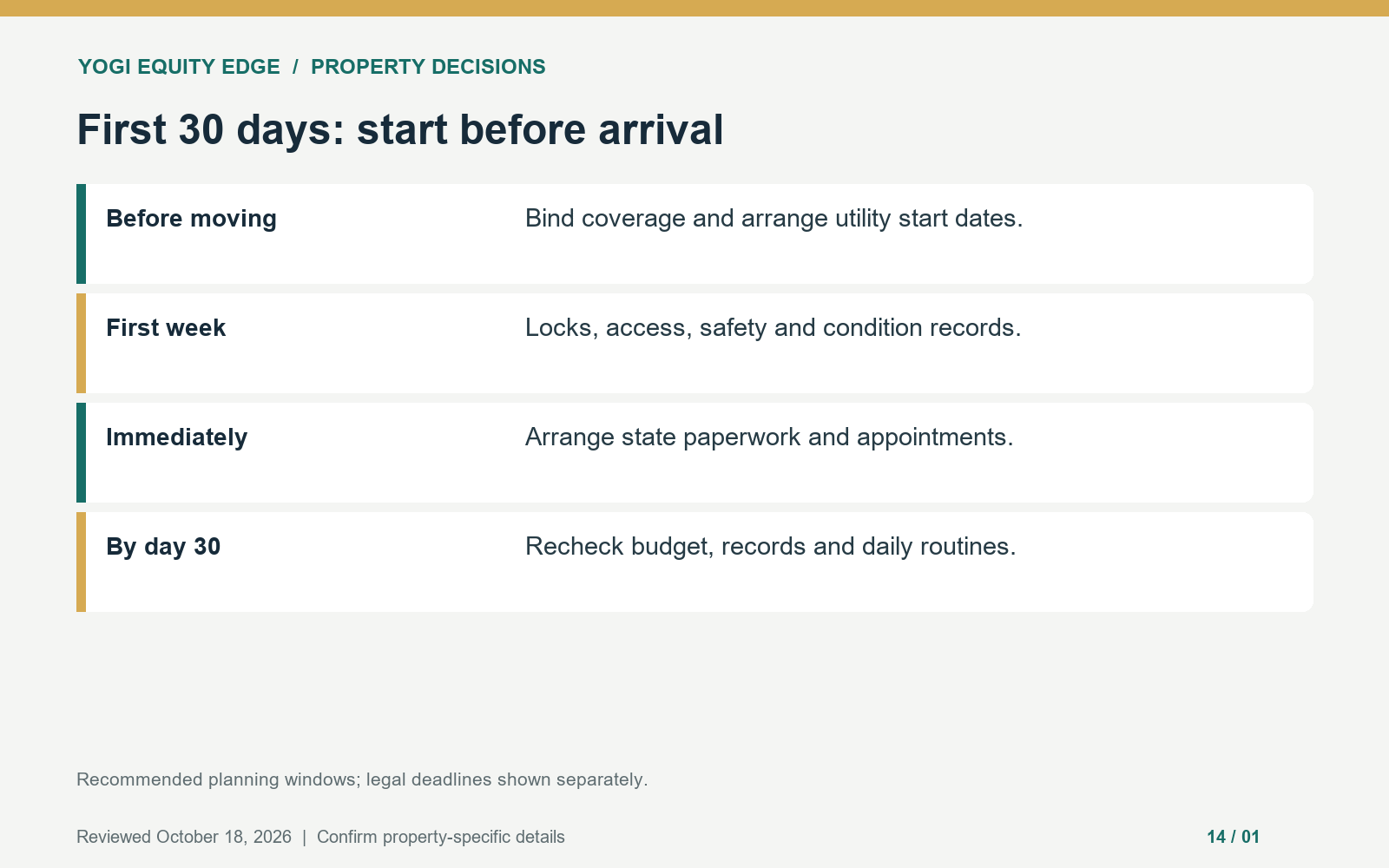
Start property preparations before moving day and state paperwork immediately.
Get property-specific insurance quotes early and confirm the coverage start date with the lender and insurer. Ask what inspections or records are required. Set up electricity, water and internet with the providers serving the actual address.
If the home has an association, arrange access credentials and obtain the current rules for moving, parking, waste collection and exterior work. Keep contracts, insurance records, inspection reports and contacts in one accessible folder.
First week: make the property usable
Arrange locks and access, confirm the utilities work, and record the home’s condition. Identify shutoffs and safety equipment. Make a list of immediate repairs and schedule qualified help for the items that should not wait.
Drive the trips you will make regularly: work, school, groceries and appointments. Test them at the relevant hours. Include tolls and parking in the budget using the current operator’s rates for your route.
Put the state deadlines on your calendar
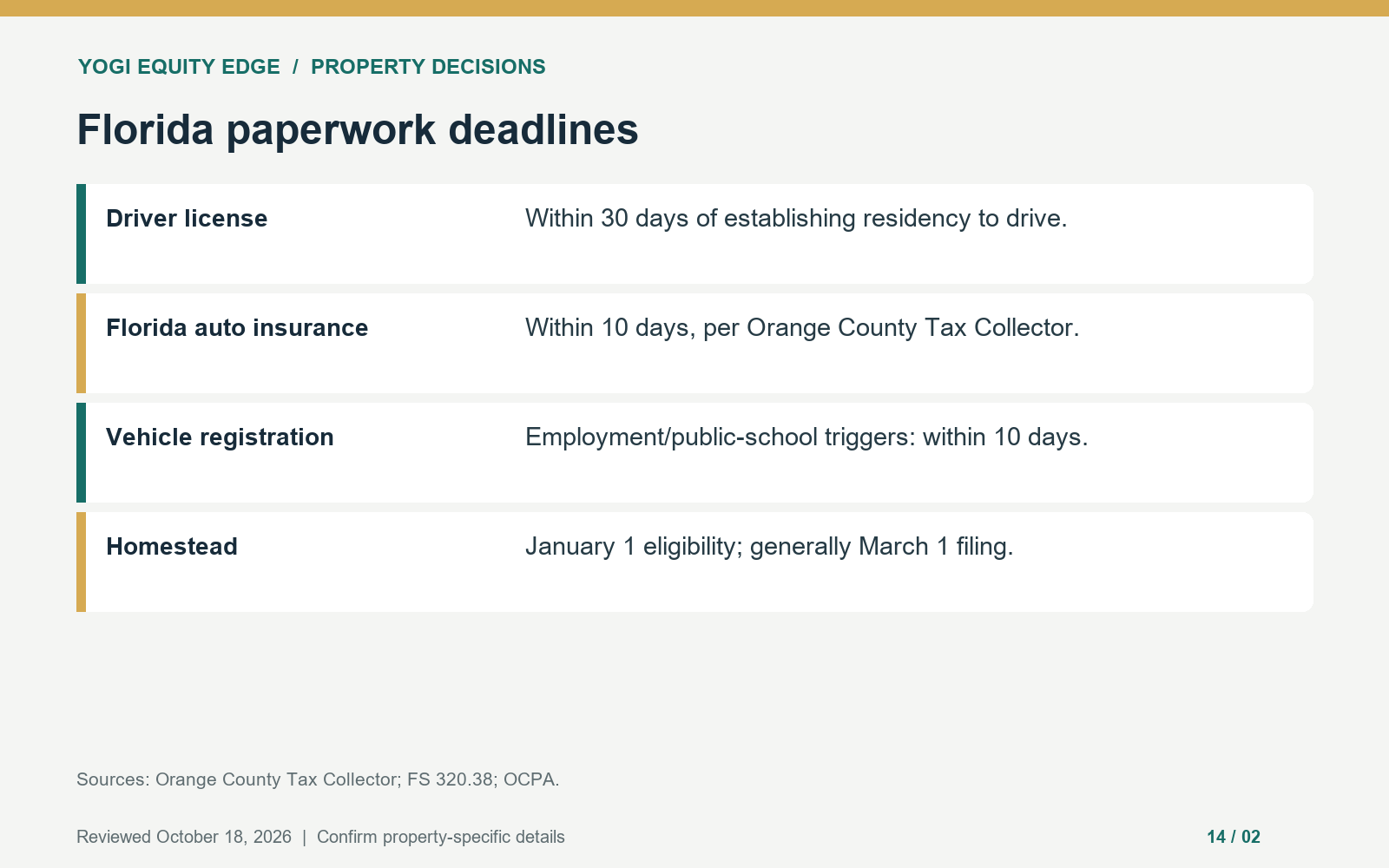
Vehicle registration is an early deadline too; confirm the requirements and exceptions for your circumstances.
The Orange County Tax Collector states that new residents must obtain a Florida driver’s license within 30 days of establishing residency to drive legally, and Florida auto insurance within 10 days for registration and titling. Its page explains residency triggers and links to appointment and document information. Orange County Tax Collector. Vehicle registration is an early obligation too: section 320.38 requires covered nonresidents to register within 10 days of starting Florida employment or enrolling children in public school, with stated exceptions. Confirm your residency trigger, insurance, title and registration requirements immediately rather than waiting until the license deadline.
Check the requirements that apply to your vehicle and circumstances before booking. Gather the identity, residency, title and insurance documents requested by the agency. Do not wait until the last week to discover a missing record.
Get the ownership budget right
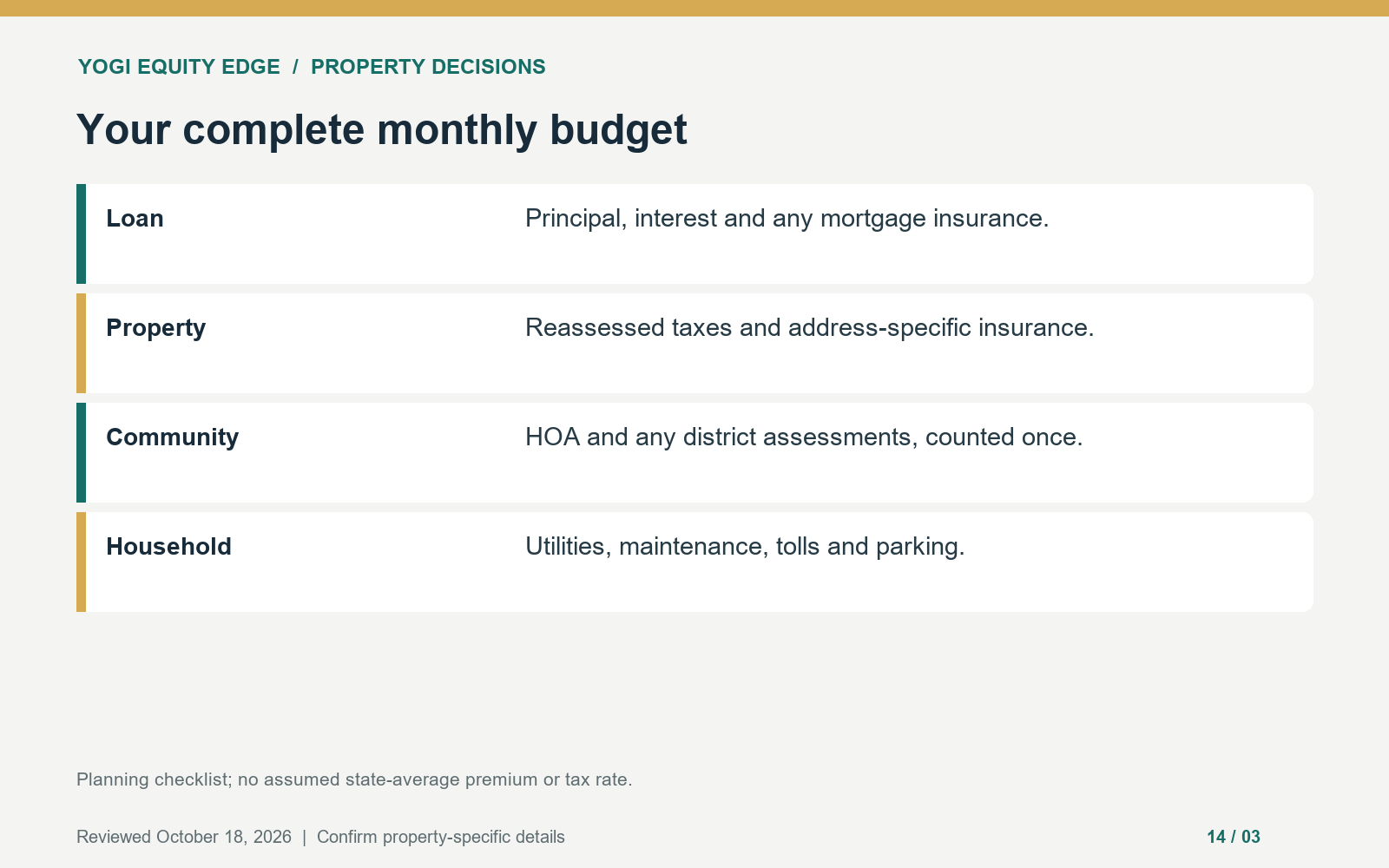
Use property-specific quotes and include mortgage insurance when applicable.
Use a complete mortgage estimate and quotes for the specific property. Include taxes, insurance, any mortgage insurance, HOA dues, district assessments, utilities, maintenance and transportation. Avoid counting a district charge twice if it is already in escrow.
Ask the property appraiser about reassessment and homestead eligibility for your situation. The seller’s tax bill can reflect benefits you will not receive. Have the applicable filing date and required evidence confirmed directly; do not assume the exemption is automatic at closing. For eligible owners, the first exemption portion is up to $25,000. The additional portion applies to eligible assessed value above $50,000 for non-school taxes and adjusts annually; Florida DOR lists a 2026 maximum of $26,411 for that additional portion. Do not assume the same amount for 2027. Ownership and permanent residence generally must be established on January 1; OCPA gives the general March 1 filing rule. Confirm the date for your tax year.
Prepare for weather before you need to
Florida’s emergency-management agency provides Know Your Zone information to help residents understand evacuation planning. Locate your zone and review local instructions. Your evacuation zone and an insurance flood map serve different purposes.
Store important documents securely, photograph belongings and decide how your household would receive alerts and leave if instructed. Read your insurance deductibles and ask about flood coverage before a storm creates urgency.
Keep a separate cash checklist
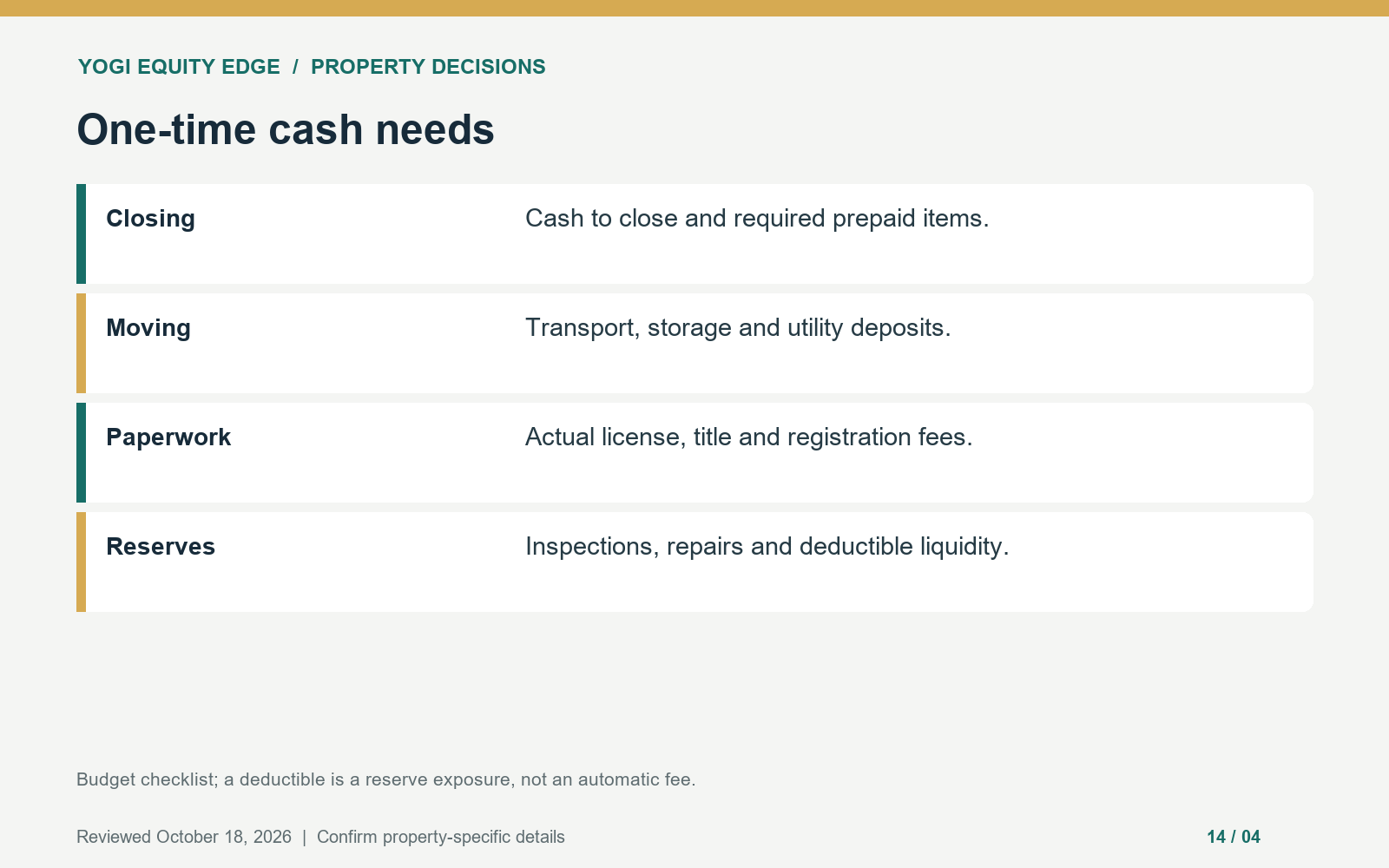
Keep one-time spending separate from reserves for possible future claims.
Budget moving costs, deposits, the actual agency fees and inspections separately from your monthly payment. A hurricane deductible is an amount you may have to absorb on a covered claim, not a fee automatically paid at closing. Keep enough liquidity for the deductible in your own policy and for immediate repairs.
Price the commute
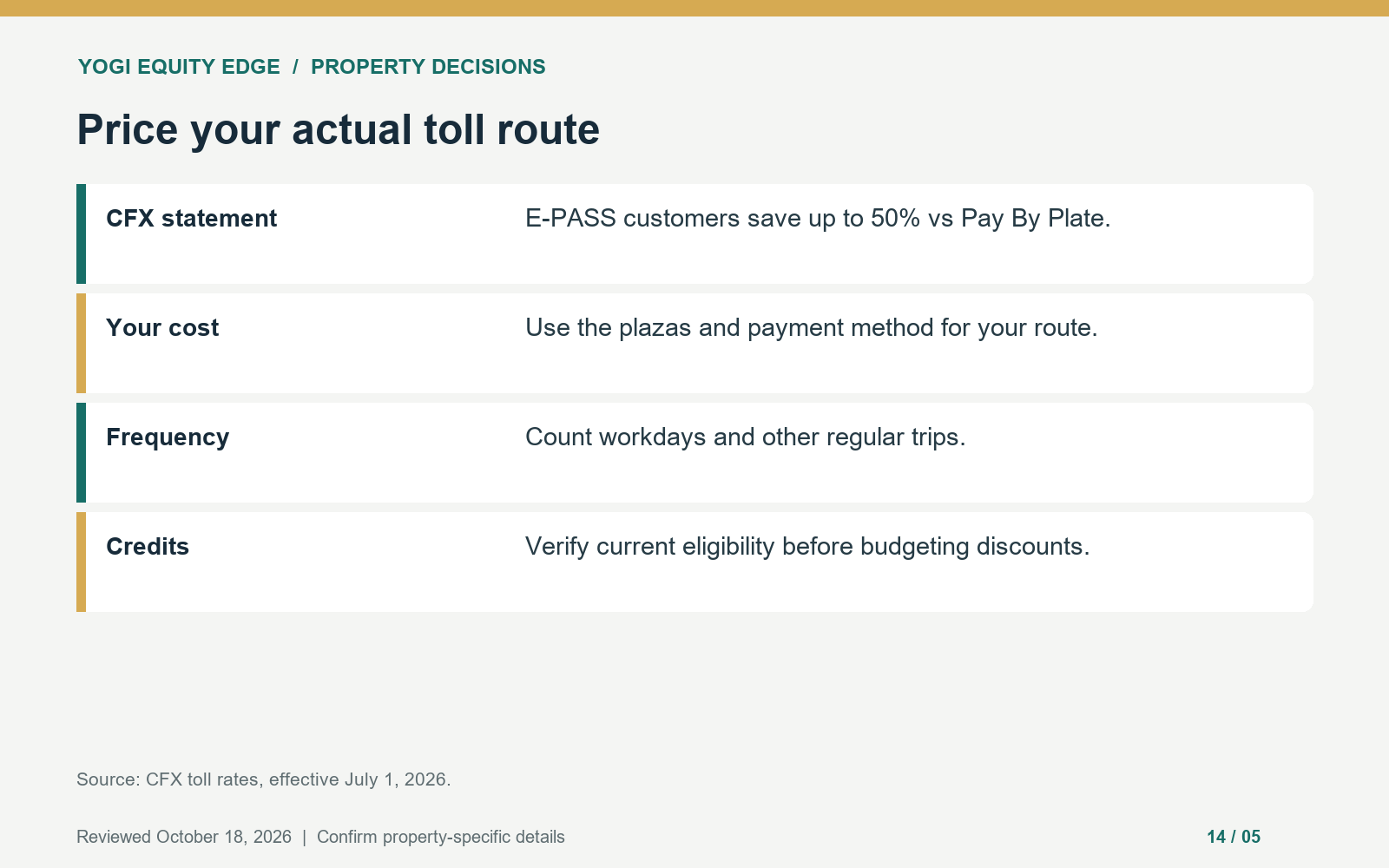
CFX says up to 50% savings; do not assume every route receives exactly half-price tolls.
CFX’s current toll-rates page says E-PASS customers save up to 50% compared with Pay By Plate. That is not a guarantee of exactly half-price tolls for every trip. Price the actual plazas, payment method and frequency, then verify any volume-discount eligibility before counting a credit as savings.
Learn before you commit further
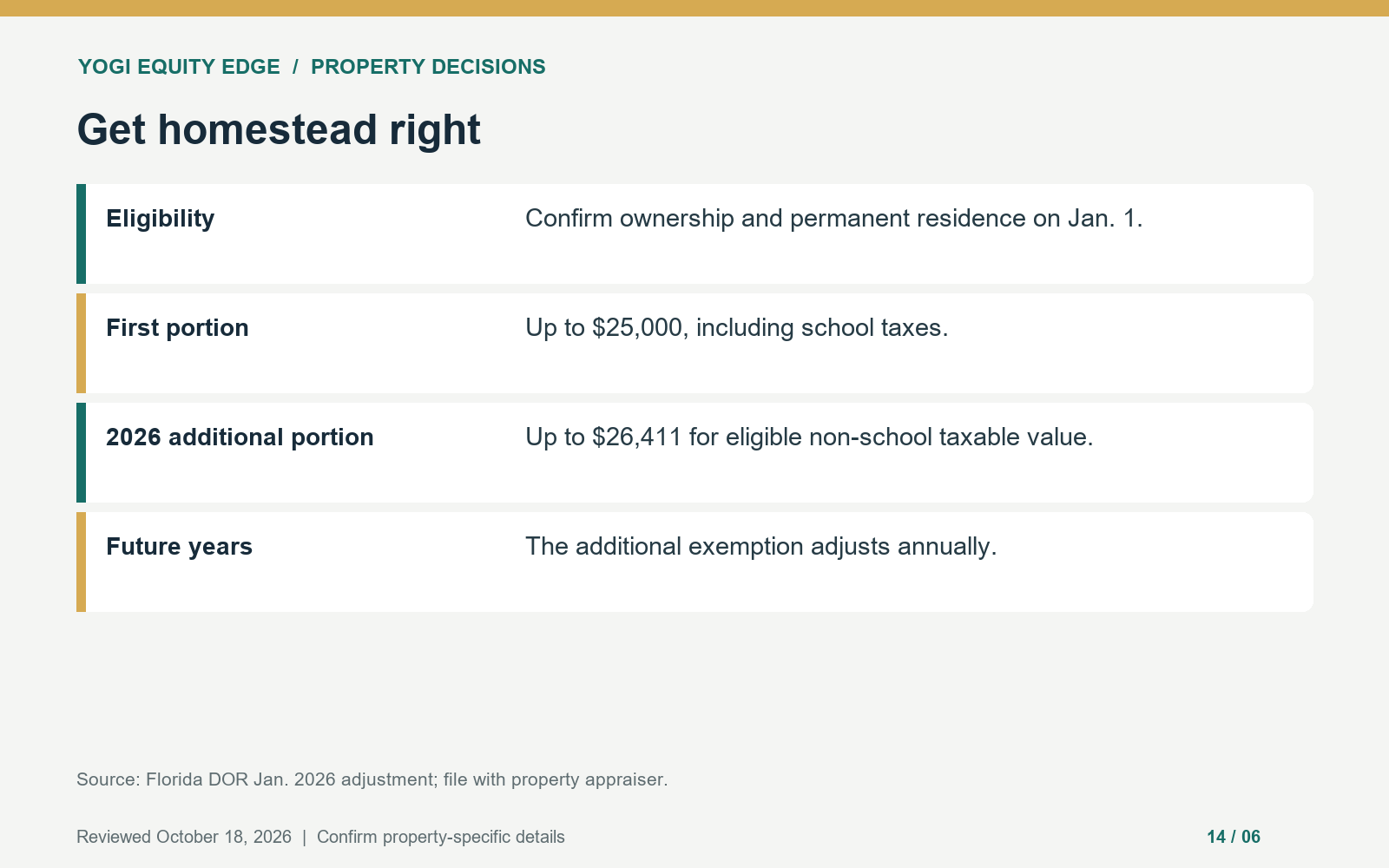
The additional exemption is inflation-adjusted; do not use a permanent $50,000 maximum.
If you rented first, use the lease period to test the area you might buy in. If you bought, avoid rushing into cosmetic changes until the inspection findings and practical needs are addressed.
Good preparation gives you time to enjoy the move. The aim is a home, budget and routine that work together once the first month is over.
Work with me
Weighing a Central Florida purchase? Send me the address, budget and what you need the property to do. We can discuss the records, costs and tradeoffs before you commit.
yogi@orlandosgreatesthomes.com | (321) 217-4220
Yogi Ganeshram, Real Estate Agent | eXp Realty LLC
Reviewed October 18, 2026. Educational information; confirm legal, tax, insurance and financing questions with the relevant professional. Market snapshots describe their stated geography and period, not an individual property. Illustrations are not quotes.