
Compare two complete budgets and the same holding period before choosing.
Reviewed October 18, 2026. Market periods and illustrative assumptions are identified where used.
Start with a rental you would actually use
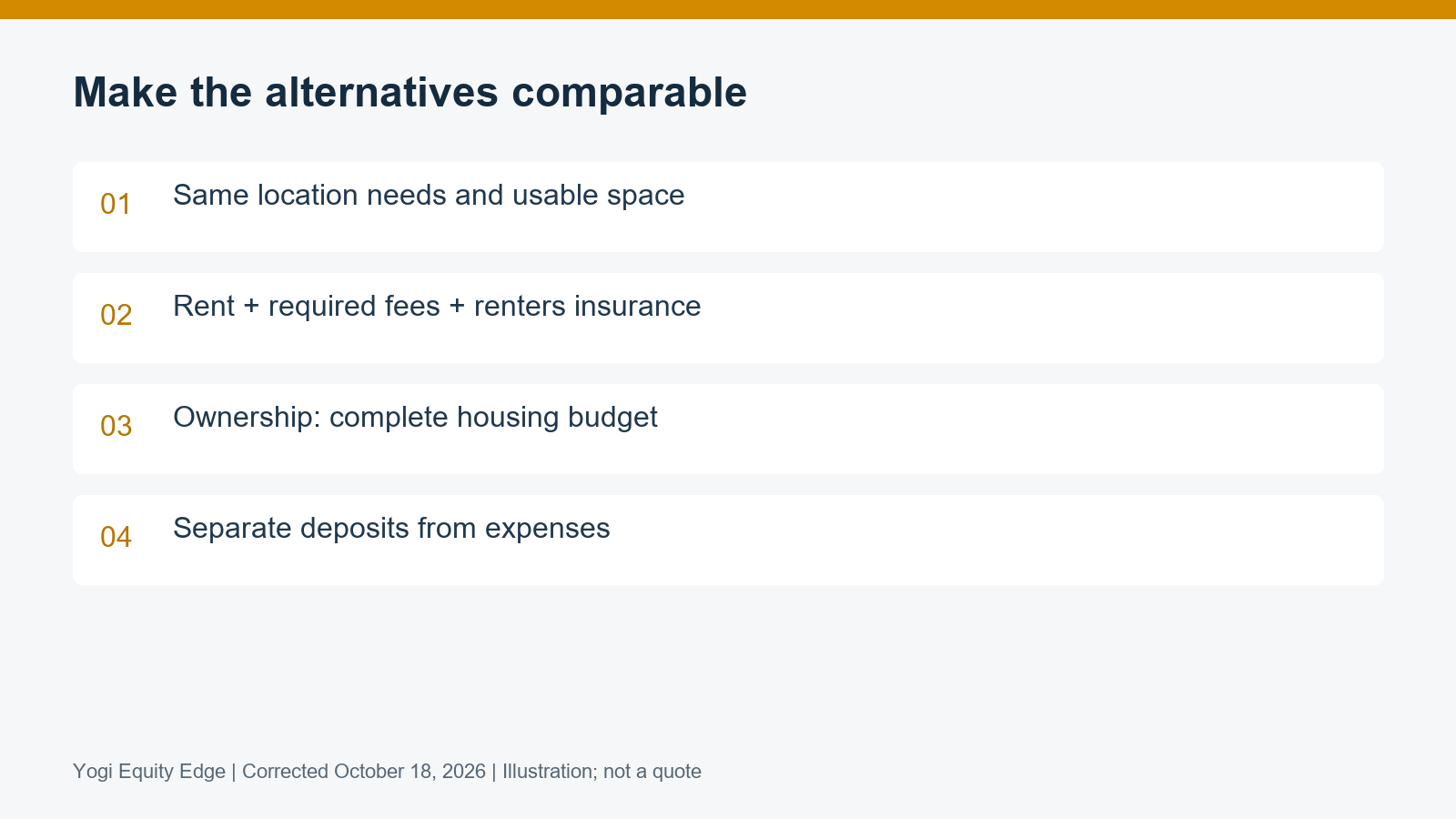
Use a comparable rental, including required fees; an apartment index is not a house-rent quote.
Renting can cost less each month and still be the wrong personal choice. Buying can build equity and still leave you financially stretched. I want the decision to start with two realistic housing options and enough cash left after either move.
Match location, space, condition and your likely length of stay. A metro apartment-rent index and a detached-house purchase are not comparable alternatives. For the rental, include required fees, renters insurance and utilities. Separate a refundable deposit from an expense.
The monthly gap: a complete illustration
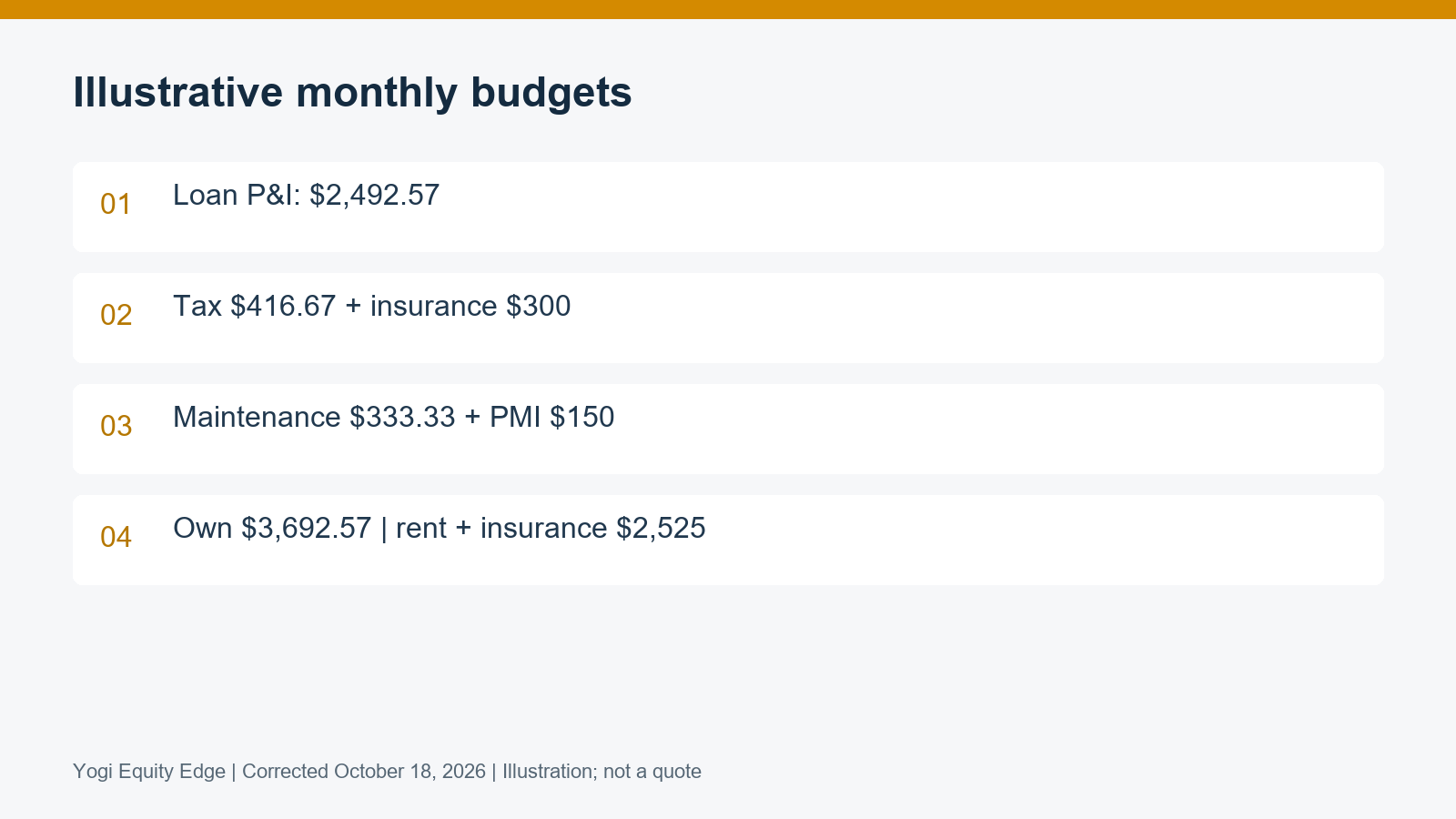
Illustration: $3,693 to own before HOA/CDD versus $2,525 rent plus renters insurance; replace all assumptions.
Here is a hypothetical comparison, not an Orlando market average. A $400,000 home with 10% down leaves a $360,000 loan. At 7.40% fixed for 30 years, principal and interest is $2,492.57 a month. That rate matches Freddie Mac’s October 15, 2026 average, reproduced by FRED; your loan quote may differ.
Assume taxes of $5,000 a year, insurance of $3,600, maintenance funding of $4,000, and PMI of $150 a month. With no HOA or CDD, the monthly planning total is $3,692.57. A $150 HOA and $200 monthly CDD allocation would raise it to $4,042.57. All those non-loan amounts are assumptions to replace with actual figures.
Against assumed rent of $2,500 plus $25 renters insurance, the gaps are $1,167.57 and $1,517.57 a month. Utilities and transportation are assumed equal. PMI may apply below 20% down on conventional financing; $150 is an example, not a quote.
What the payment buys
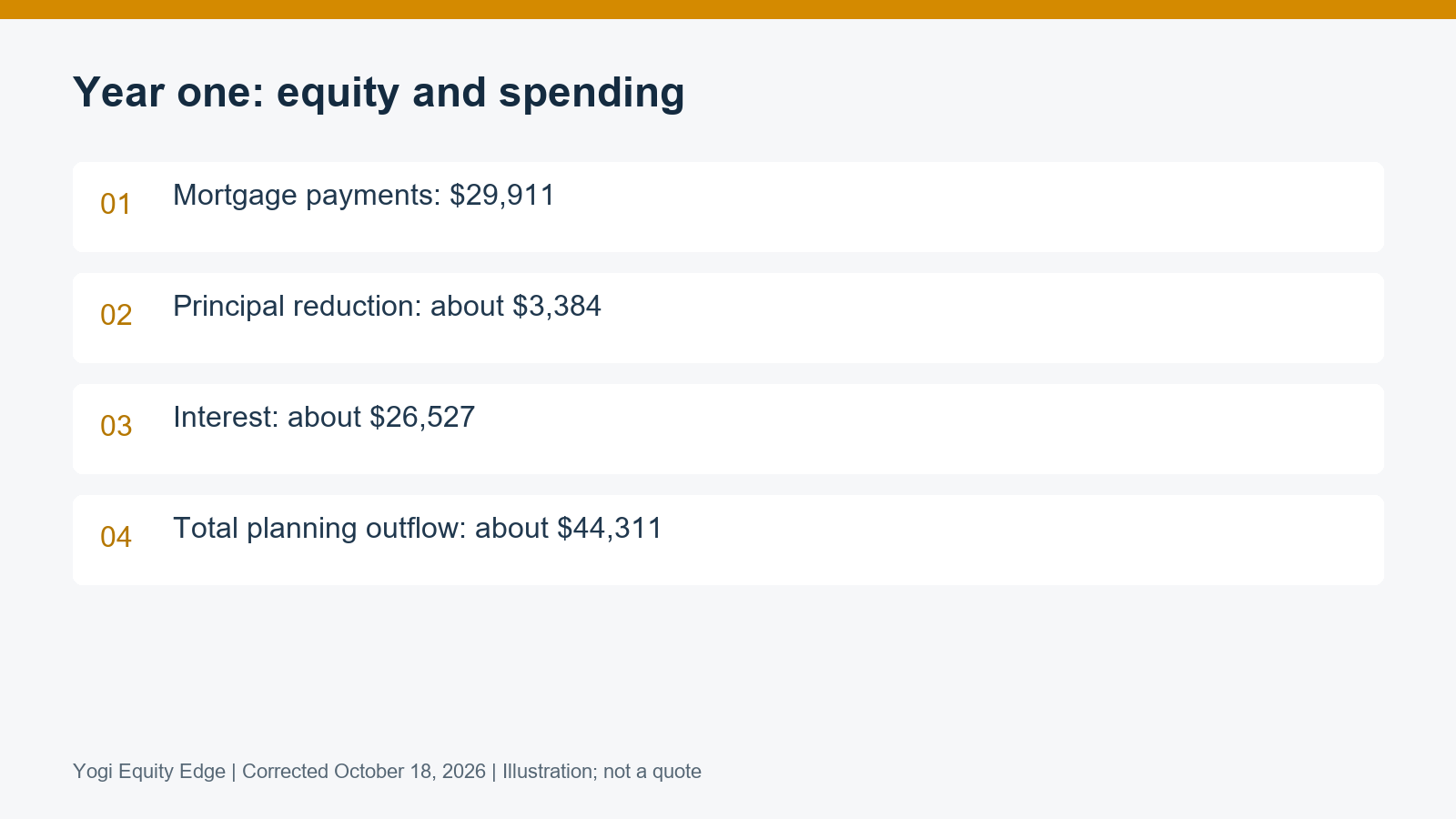
About $3,384 of the first year’s payments reduces this example loan; the rest of the budget does not.
The first 12 loan payments total $29,910.81. About $3,384 reduces principal and about $26,527 is interest. The other assumed ownership costs do not reduce the mortgage. Including taxes, insurance, maintenance funding and PMI, first-year planning cash outflow is about $44,311 before HOA/CDD.
Principal repayment builds equity, but cash in the house is not the same as spendable profit. Selling costs, the remaining loan and any tax consequences affect what you can take away. Maintenance funding is a reserve assumption; actual repair bills will be uneven.
When buying wins depends on the inputs
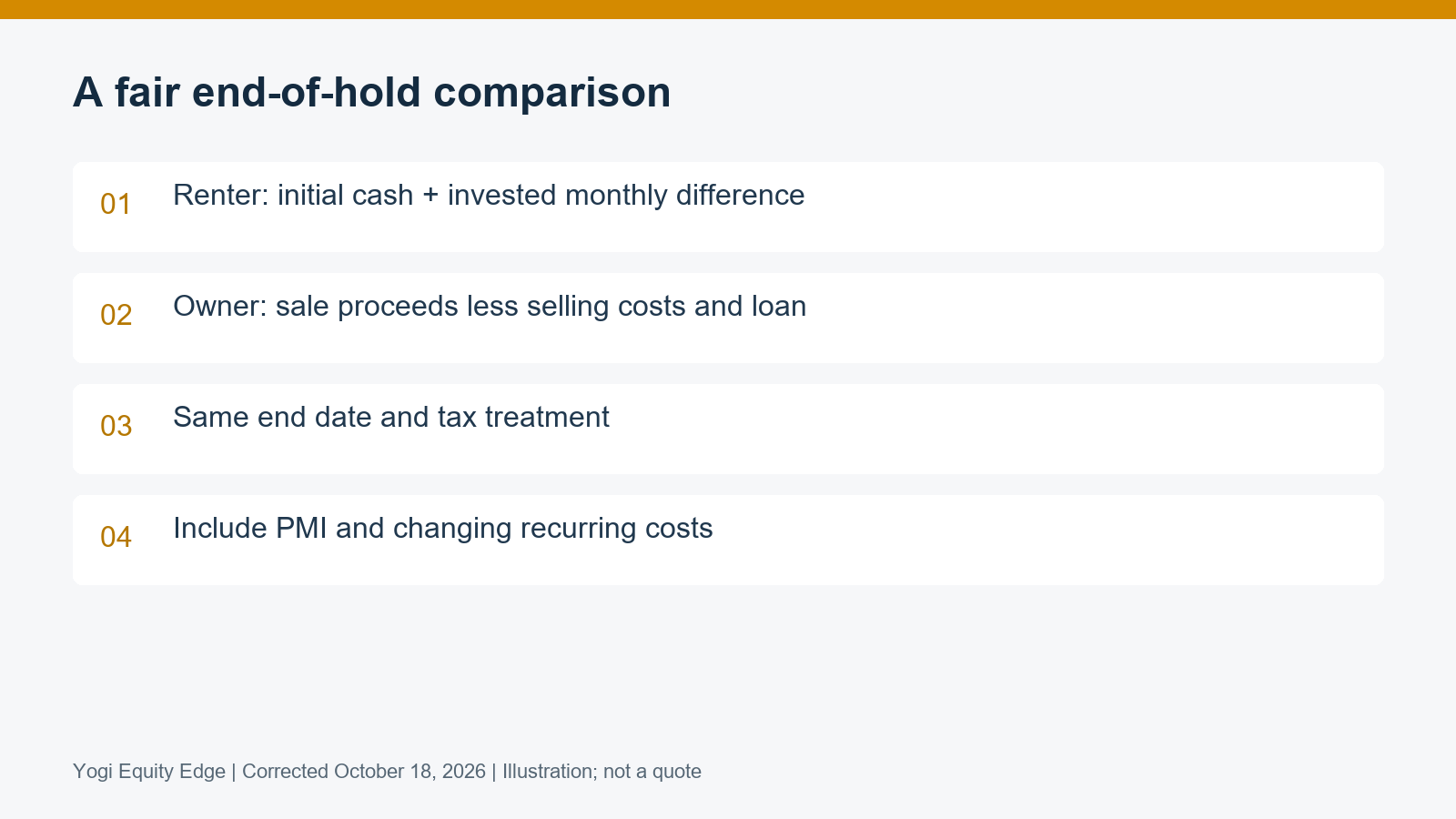
There is no universal break-even year; both sides need consistent cash-flow and resale assumptions.
A fair net-worth model gives the renter the down payment, buyer closing costs and monthly savings to invest. It gives the owner the future sale proceeds after selling costs and the outstanding mortgage. Both alternatives use the same end date.
Specify rent growth, investment return after tax, home appreciation, changing taxes and insurance, maintenance, HOA/CDD, PMI duration, buying costs and selling costs. Let negative monthly savings flow the other way if renting eventually becomes more expensive. Otherwise the comparison favors one choice by construction.
There is no universal break-even year. Future appreciation and investment returns remain assumptions.
Stress-test the decision
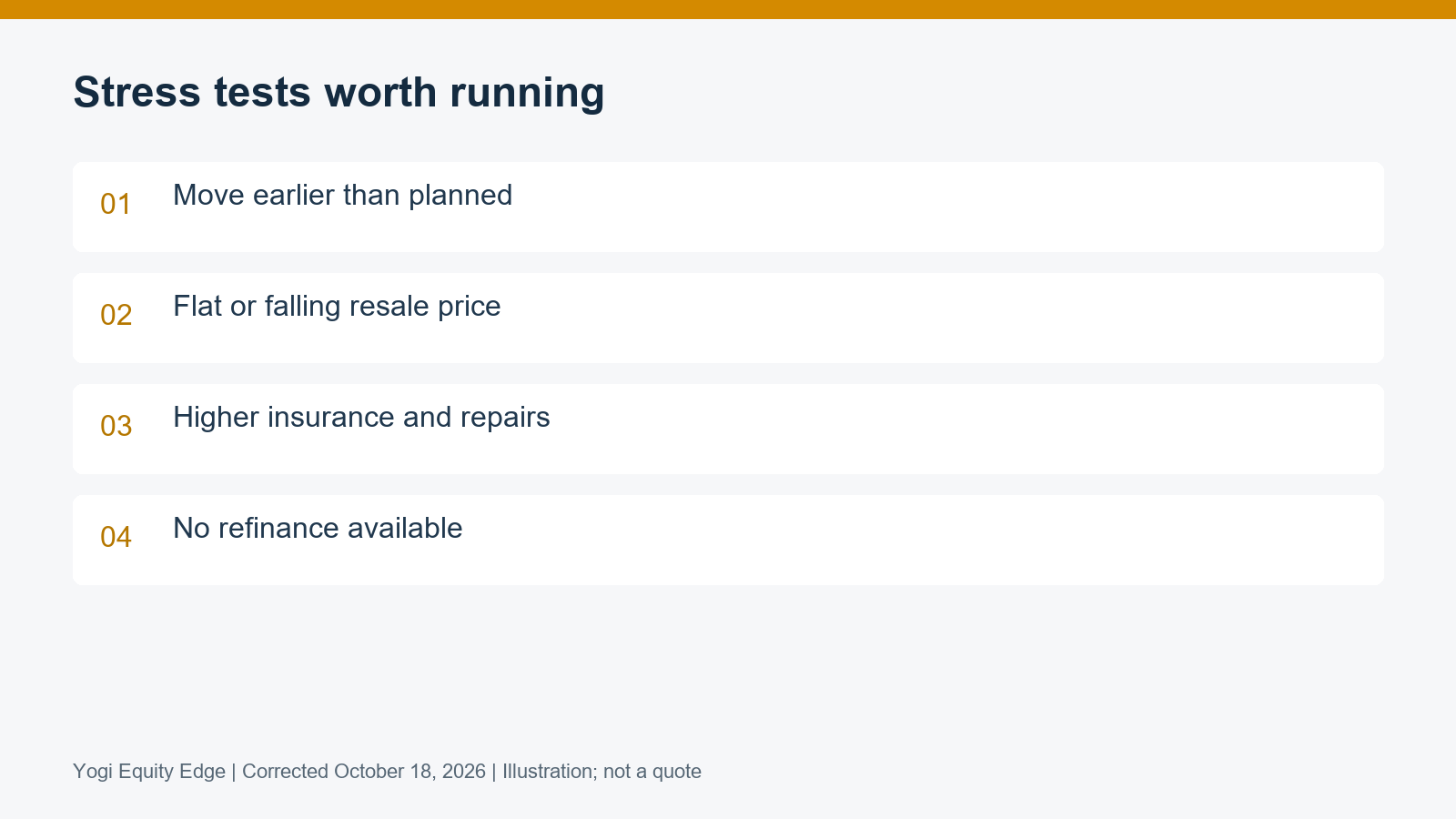
Test an early move, flat or falling prices, and higher operating costs before counting on appreciation.
Run short, medium and long holding periods, including an earlier move than planned. Try flat and falling home prices as well as growth. Increase insurance or repairs and see whether you can still carry the home. Do not assume a refinance will rescue the budget.
Buying also offers control over the space and less exposure to lease-renewal decisions, but taxes, insurance and association charges can still rise. Renting preserves flexibility, but future rent and availability are uncertain. Put those tradeoffs next to the numbers.
Make the choice your cash can support
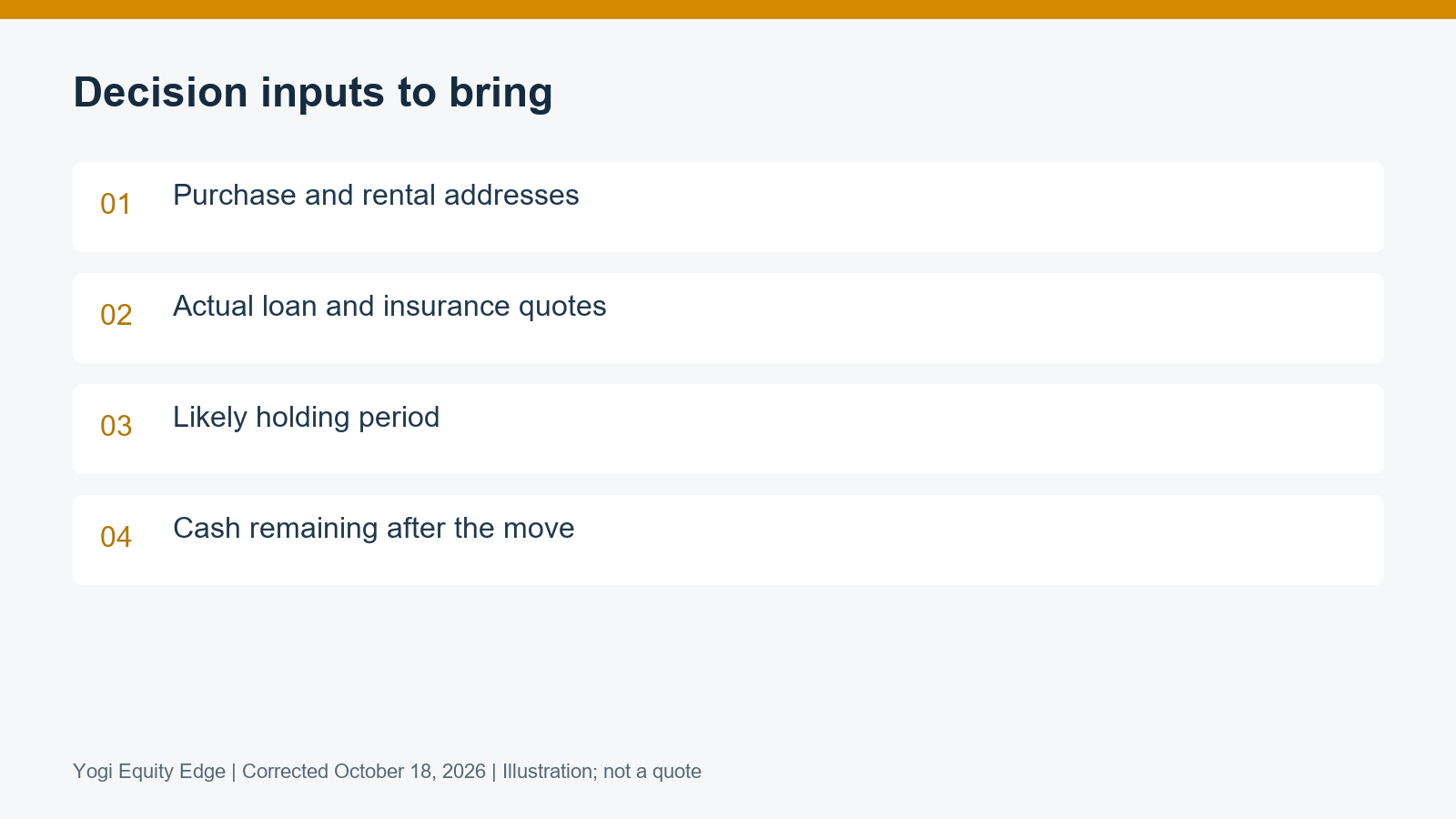
Choose using your actual options, time horizon and cash cushion, then revisit when those change.
Buy when the complete budget works, reserves survive closing and you can accept the risk over your likely holding period. Rent when flexibility or preserving cash matters more. A room rental or duplex may change the comparison, but only after checking zoning, lending, insurance, association rules, vacancy and operating costs.
If you rent, decide how much of the difference you will actually save. If you buy, automate maintenance funding rather than hoping every year is a cheap year. Neither path builds wealth just because a spreadsheet assumes disciplined saving.
Send me the purchase and rental options you are weighing, along with how long you expect to stay. We can compare the complete costs and identify which assumptions matter most.
Educational information, not individualized legal, tax, insurance or financial advice. Confirm property-specific figures and contract rights with the appropriate professionals.