
Reviewed October 18, 2026. Market data describes the stated geography and period. Payment illustrations are not quotes.
Start with your numbers
Selling before the holidays can make sense when your house is ready, your price is realistic and waiting costs you money. Waiting can make sense when the property needs work or your timing is flexible. The calendar alone cannot make the decision.
I would start with two estimates: what you could reasonably net from a sale now, and what keeping the house until spring would cost. Put them on one page before deciding.
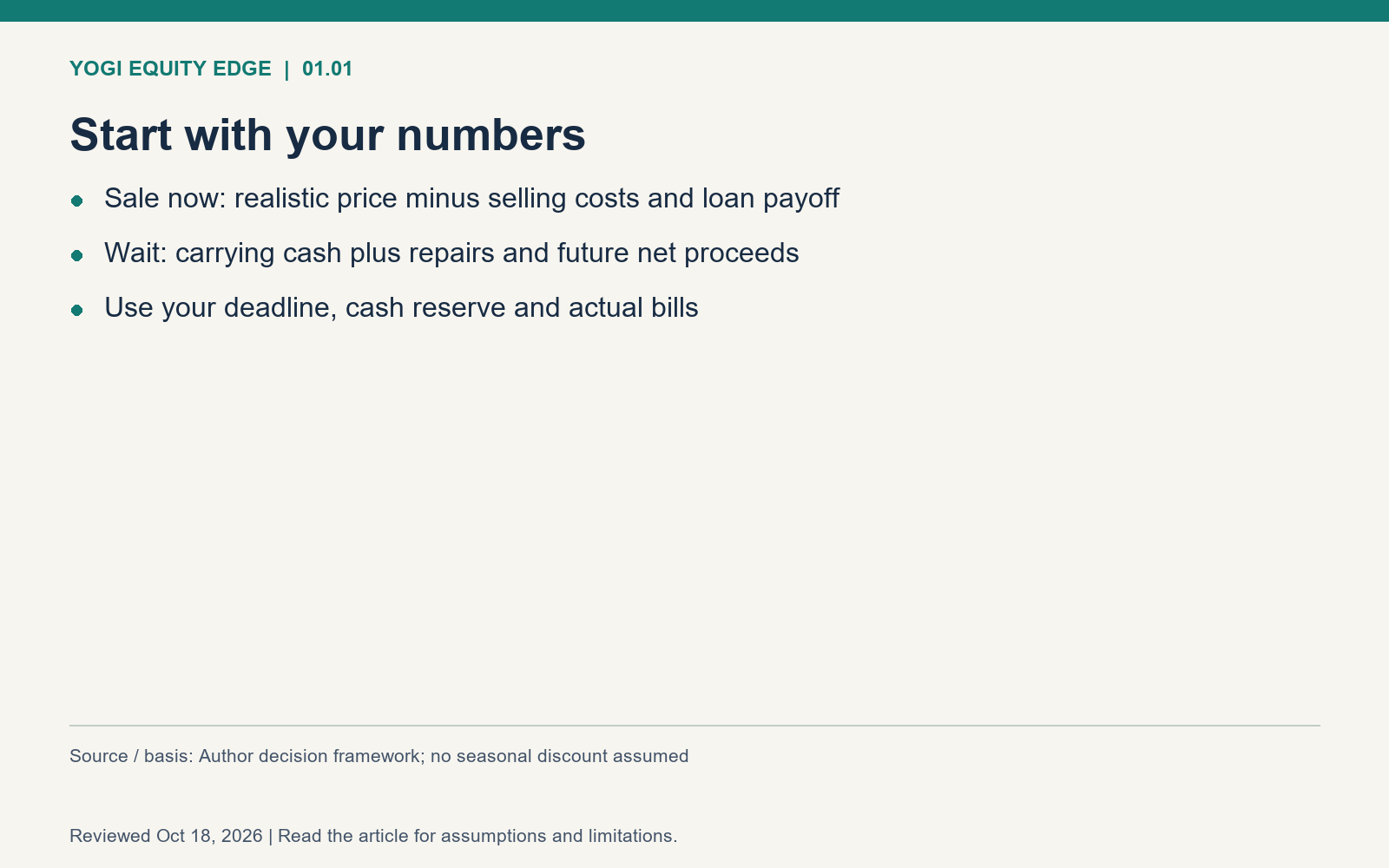
A sale decision starts with your net proceeds and the cost of waiting.
What the current market tells you
ORRA’s September 2026 report recorded 2,325 sales, 12,464 homes in inventory and a $399,610 median sale price. These are broad Orlando-area figures, not a valuation of your property. Read the ORRA public report.
Buyers have choices. For a seller, the practical response is to study competing homes in the same property type, price band and location. An area-wide median cannot tell you how much to discount a particular listing.
Do not turn a seasonal asking-price pattern into a guaranteed fall discount or spring gain. Asking prices, closed-sale prices and the mix of properties on the market answer different questions.
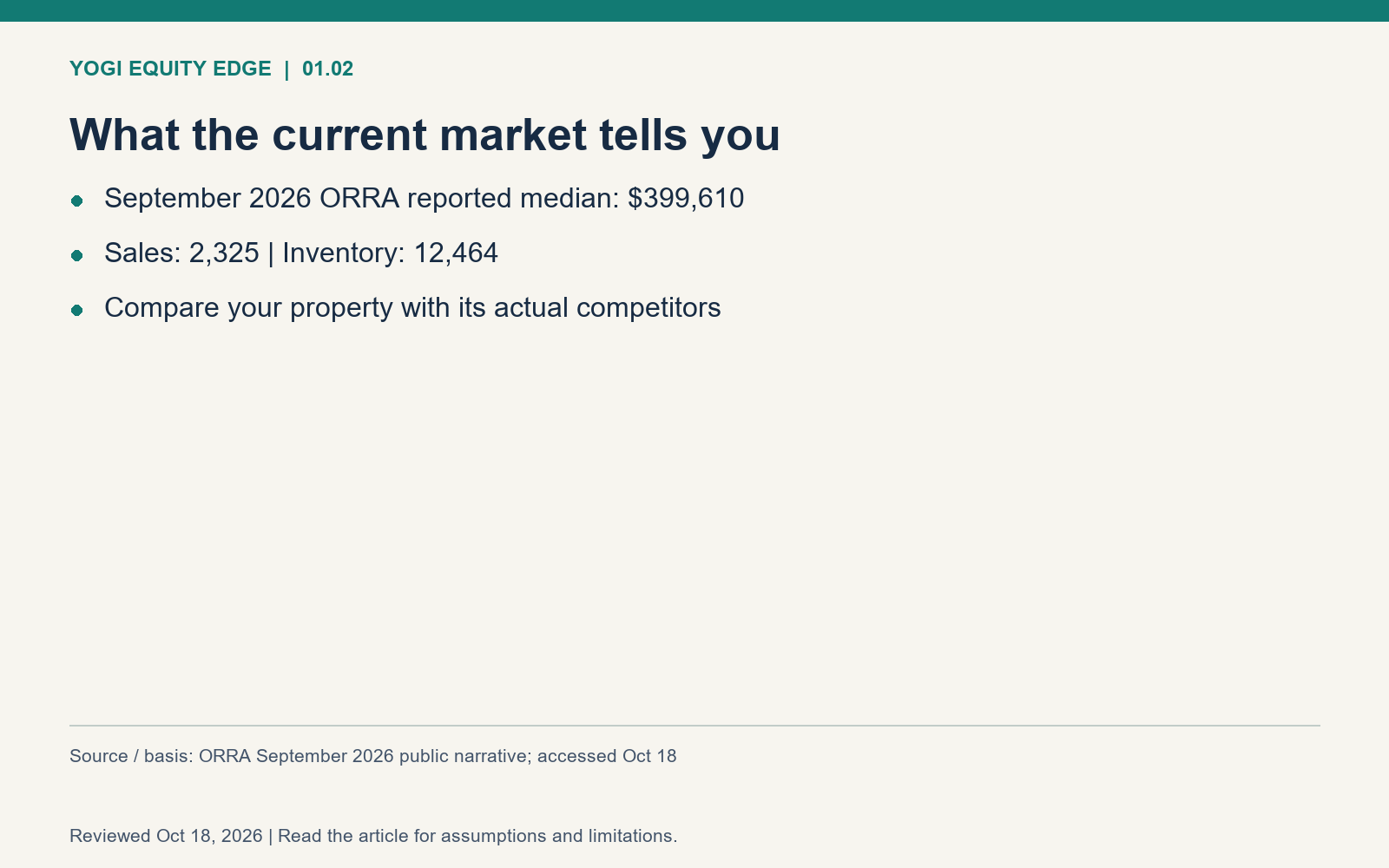
September gives sellers context, not a price prediction.
Rates change the buyer budget
Freddie Mac reported a 7.40% average 30-year fixed mortgage rate on October 15, 2026. That is a national survey benchmark, not a rate available to every buyer. Freddie Mac mortgage survey.
At an assumed 7.40% over 30 years, a $400,000 loan costs about $2,770 a month in principal and interest. Taxes, insurance, mortgage insurance and association assessments are additional. The lender’s quote and the buyer’s qualifications decide the real payment.
Price with that payment in mind. A seller credit may help a buyer with closing costs, but compare its effect on your net proceeds with a price reduction. Have the lender confirm that the proposed credit is allowed and useful.
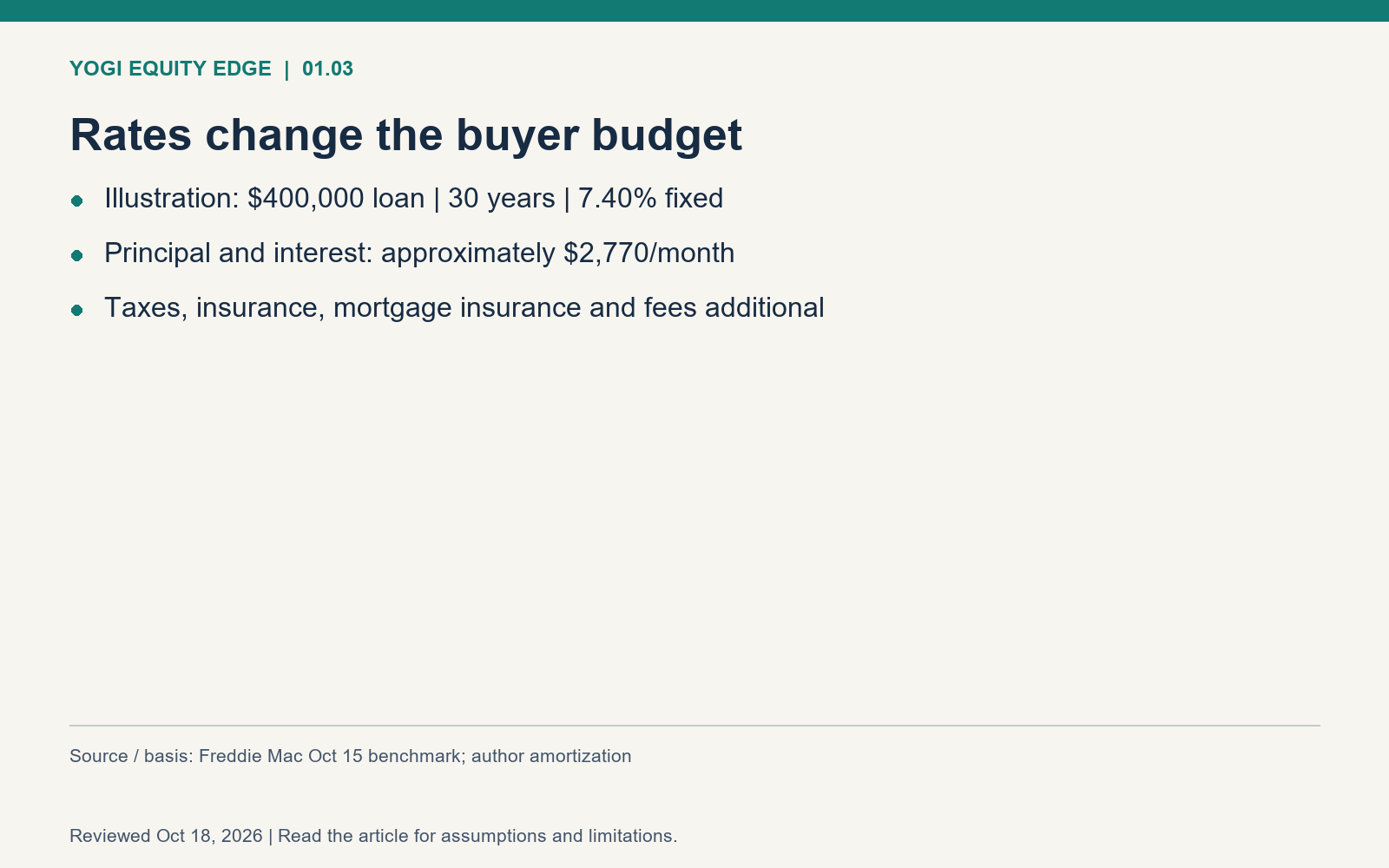
Price and financing both shape buyer affordability.
Compete on price and condition
Start with recent comparable closed sales, then review active listings and pending activity where available. Match location, size, condition and property type. Give more weight to genuinely comparable homes than to a larger sample of weak matches.
Walk through your house with the questions a buyer will ask. How old is the roof? What has been repaired? Are there permit records? What do the association dues cover? Fix a known defect or get a written estimate so negotiations do not begin with guesswork.
Make showings practical: clear access, good lighting, pets handled and enough appointment flexibility for buyers with work schedules.
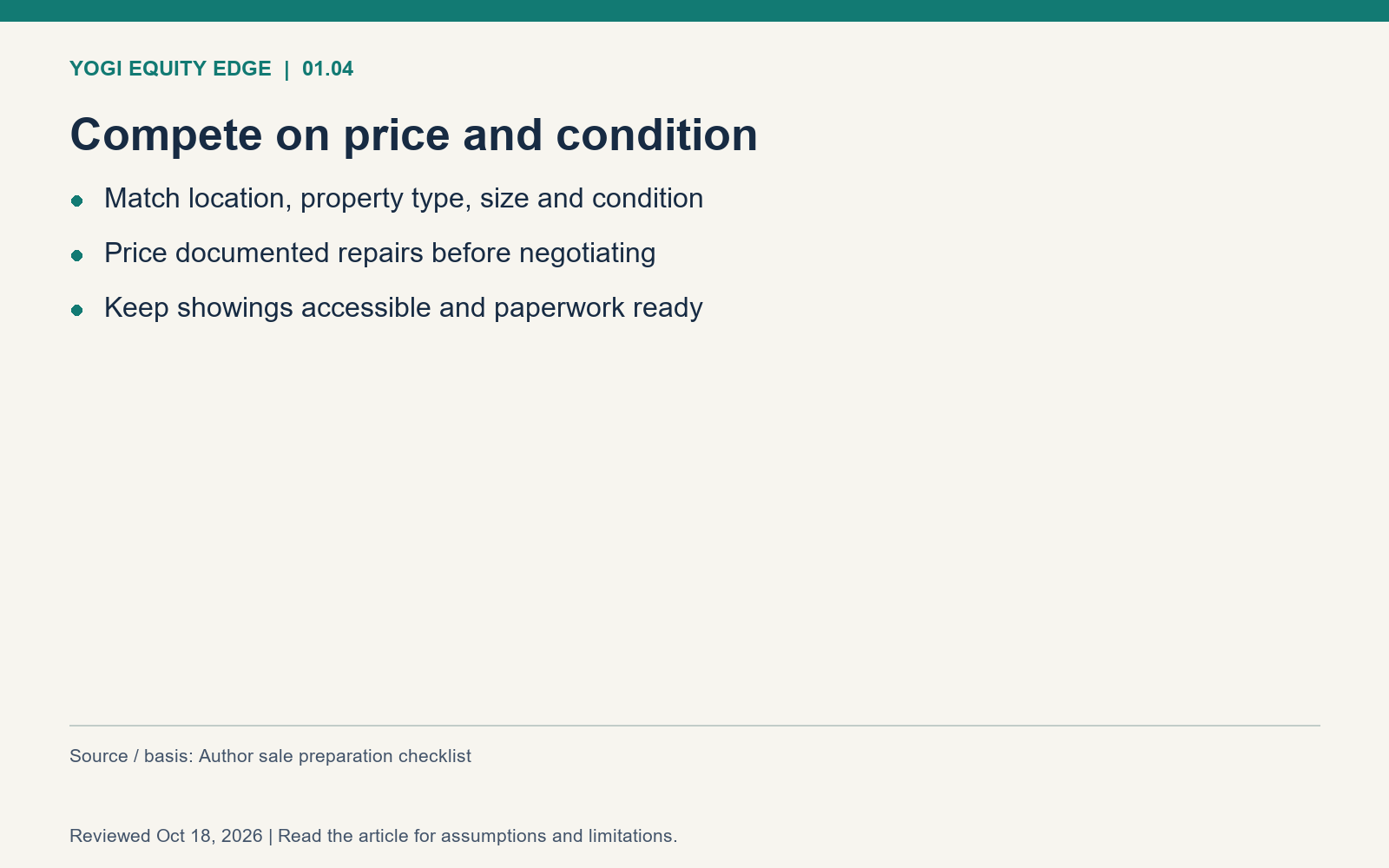
The strongest comparison is property to property.
Run the wait calculation honestly
Here is a hypothetical cash-flow example. Suppose mortgage principal and interest is $2,000 a month, with separate taxes of $412, insurance of $208 and utilities of $225. Monthly cash outflow is $2,845; five months is $14,225. If the mortgage payment already includes tax and insurance, remove those duplicate lines.
That is cash required, not all economic expense. Part of a principal-and-interest payment reduces the loan balance. Include that lower payoff in the future net-sale calculation rather than treating every dollar as a permanent loss.
For a $450,000 house, $14,225 is about 3.16% of the price. That does not mean the house will rise or fall by that amount. It gives you a useful threshold to test with your own bills and sale-cost estimates.
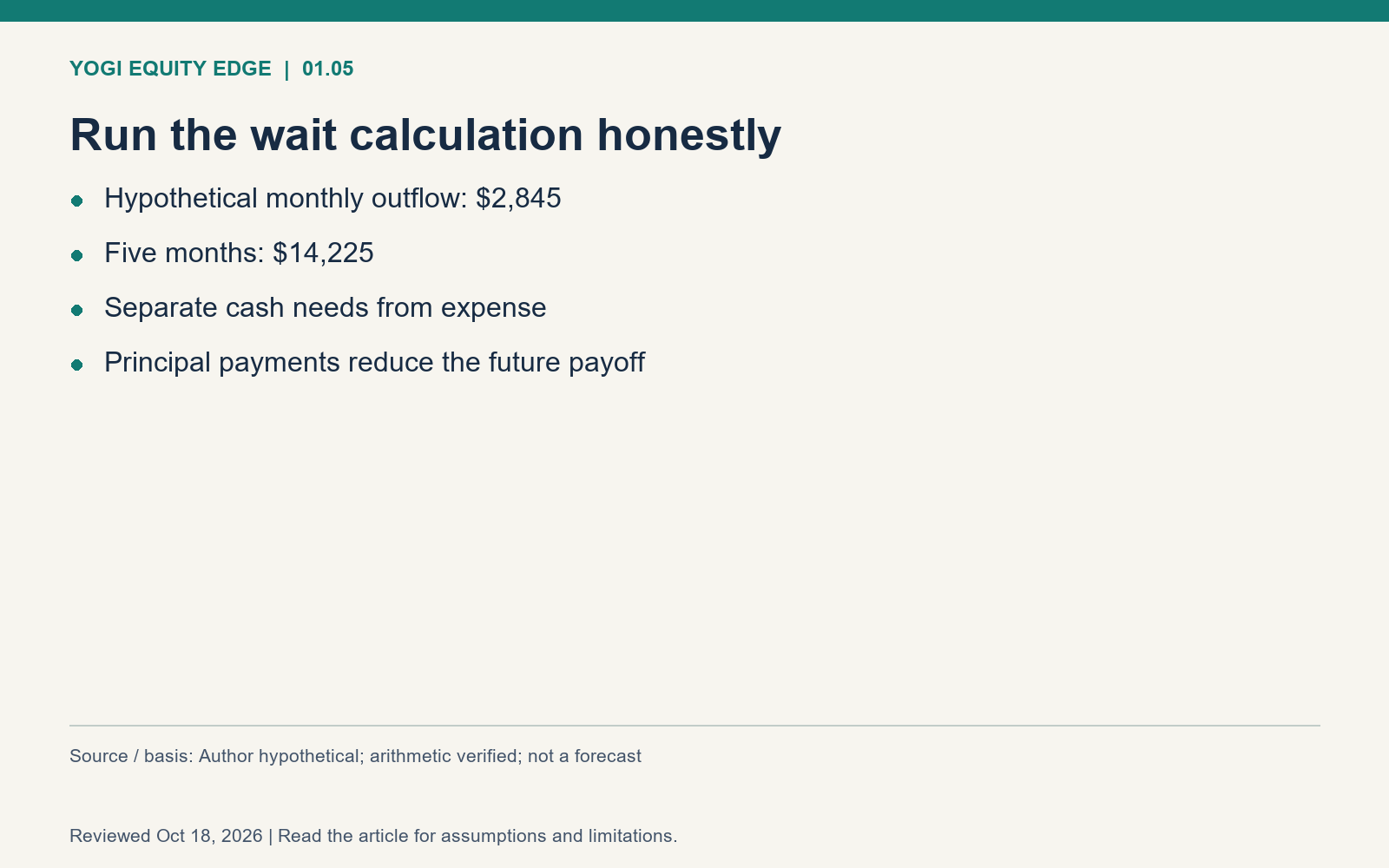
Five months of carrying cash can be substantial; principal paydown still matters.
What to fix first
Resolve items most likely to affect financing, insurance or a buyer’s willingness to proceed. Start with roof condition, active leaks and known electrical or plumbing hazards. Then address basic presentation and gather permits, repair receipts and association information.
Citizens requires four-point inspections for applications on properties more than 20 years old. Other insurers have their own requirements. A four-point covers roof, electrical, plumbing and HVAC; it does not replace a full inspection. Citizens inspection requirements.
A useful holiday listing plan has a price, a preparation list and a showing plan. If those are ready and waiting strains your cash, there is no reason to assume spring will solve the problem.
Send me your address, timing and monthly carrying costs. We can compare selling now with waiting using your numbers.
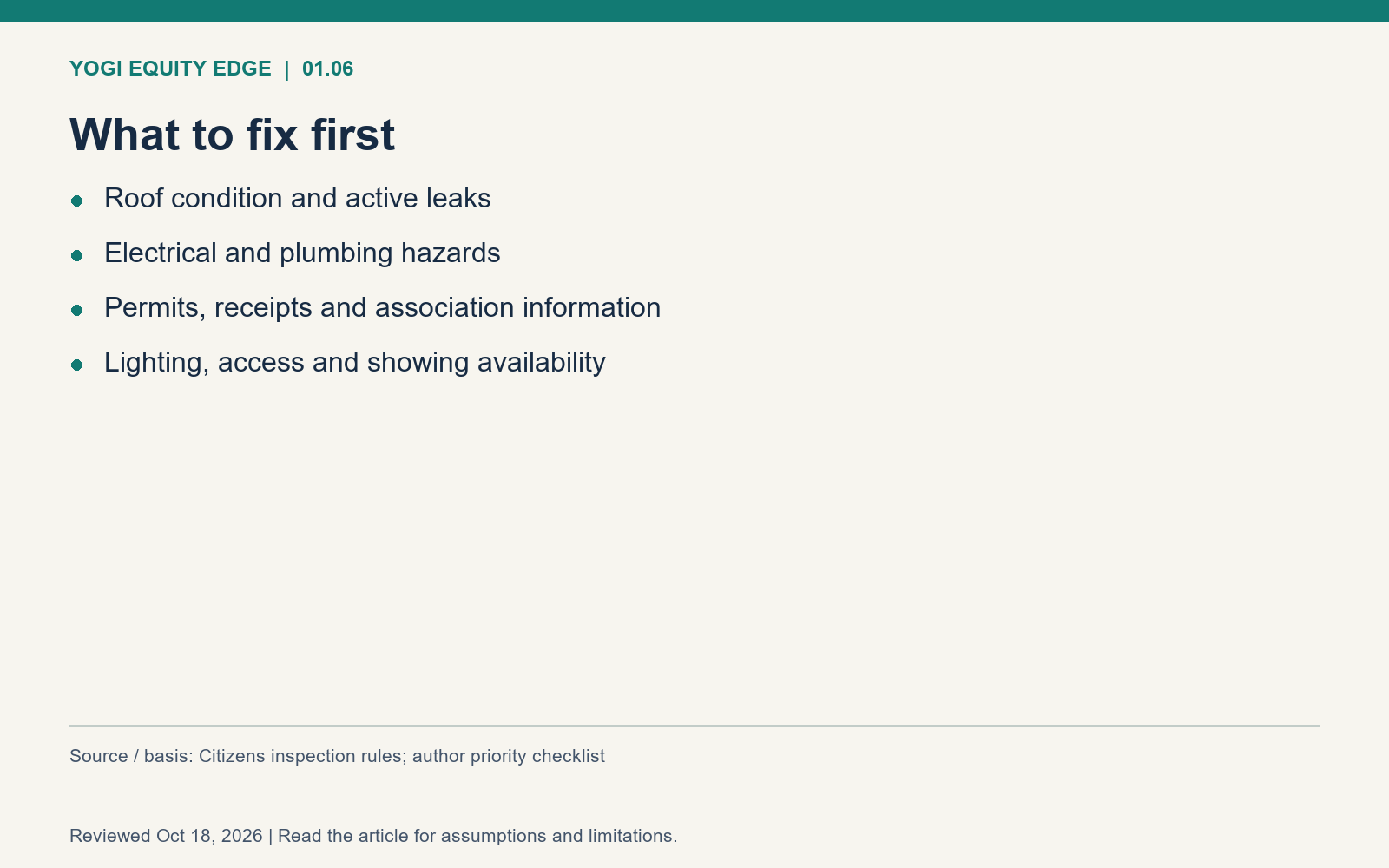
Start with condition, insurability and records.
General educational information. Verify property, loan, insurance and contract details with the appropriate licensed professional.
Yogi Ganeshram | Real Estate Agent, eXp Realty LLC
yogi@orlandosgreatesthomes.com | (321) 217-4220