
A practical comparison of nine areas, built around your address and budget.
Reviewed October 18, 2026. Market periods and illustrative assumptions are identified where used.
The nine at a glance
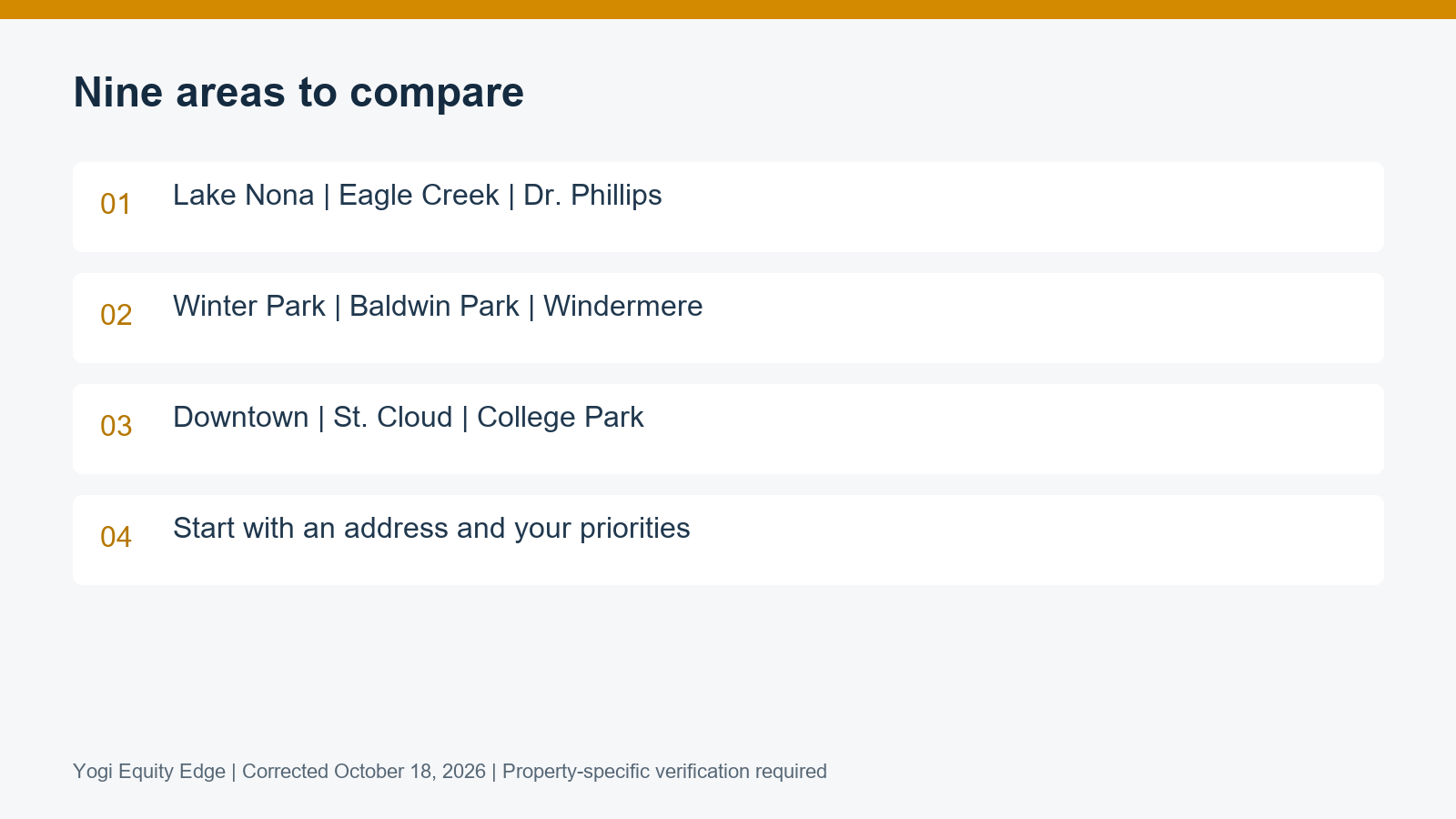
Nine search areas, one address-specific method; no area is ranked by household type.
The useful question is not which Orlando neighborhood is best for a type of person. It is which specific home supports the way you want to live at a cost you can carry. Lake Nona, Eagle Creek, Dr. Phillips, Winter Park, Baldwin Park, Windermere, downtown Orlando, St. Cloud and College Park can all enter the search. None deserves a universal verdict.
Start with your monthly ceiling, required space, destinations and maintenance preferences. Then choose actual addresses to compare. Mailing names, ZIP codes, municipal boundaries and neighborhood labels can cover different areas. Confirm which geography a listing or market statistic describes.
What price statistics can tell you
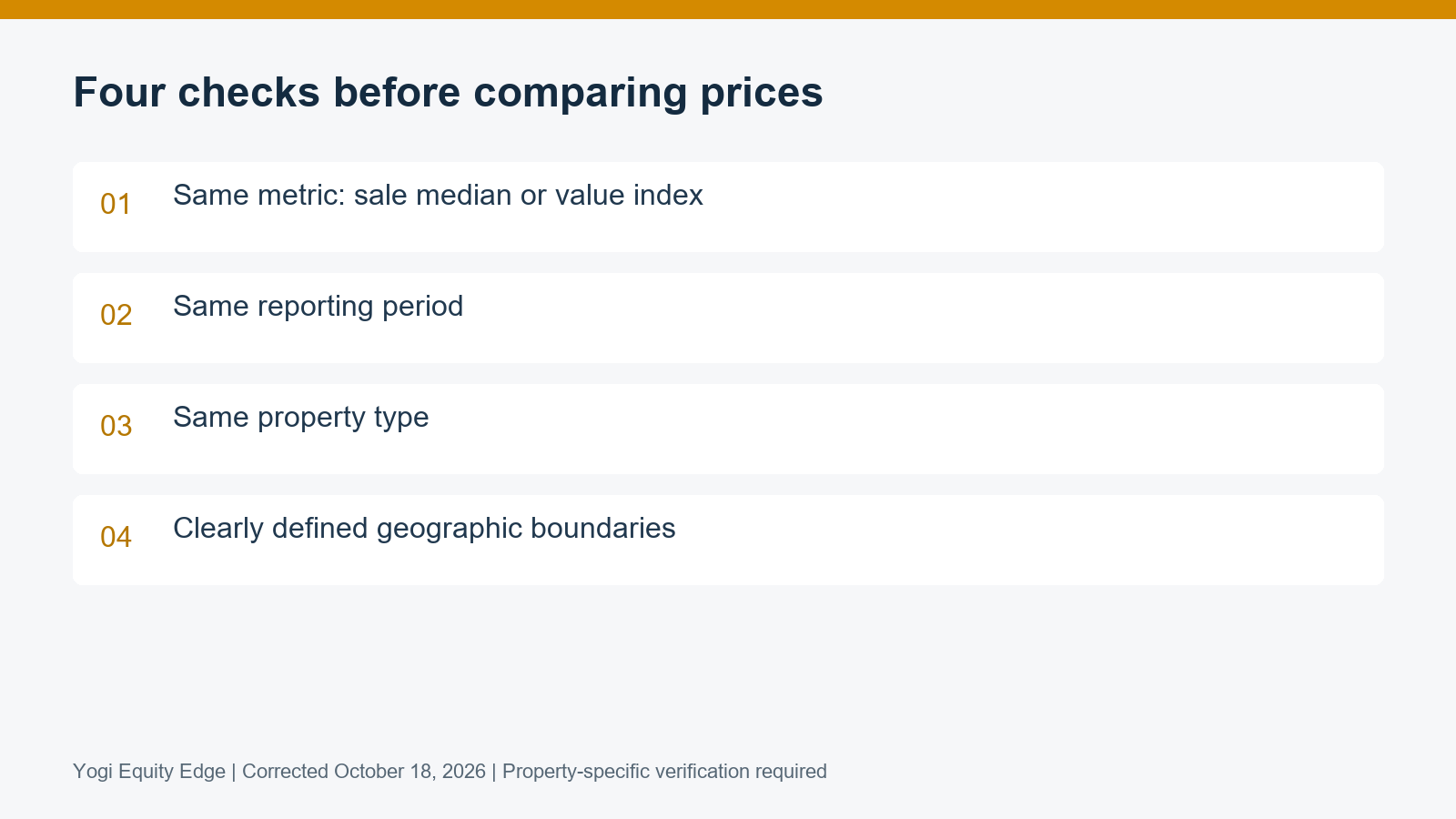
Compare the same metric, period, property type and geography before drawing a price conclusion.
A median sale price describes the middle sale in a particular dataset. A modeled typical home value describes something different. Putting both in one price ladder does not create a consistent ranking, especially when a ZIP code substitutes for a neighborhood.
Use the same source, reporting period, property type and geography when comparing markets. Then price your finalist against genuinely comparable properties. A condo-heavy area and a detached-home area may show different medians even when the homes you would buy cost similar amounts.
Price per square foot has limits too: layout, size, land, age, condition and amenities affect it. It is a useful question to investigate, not a formula for valuing every house.
Read market direction carefully
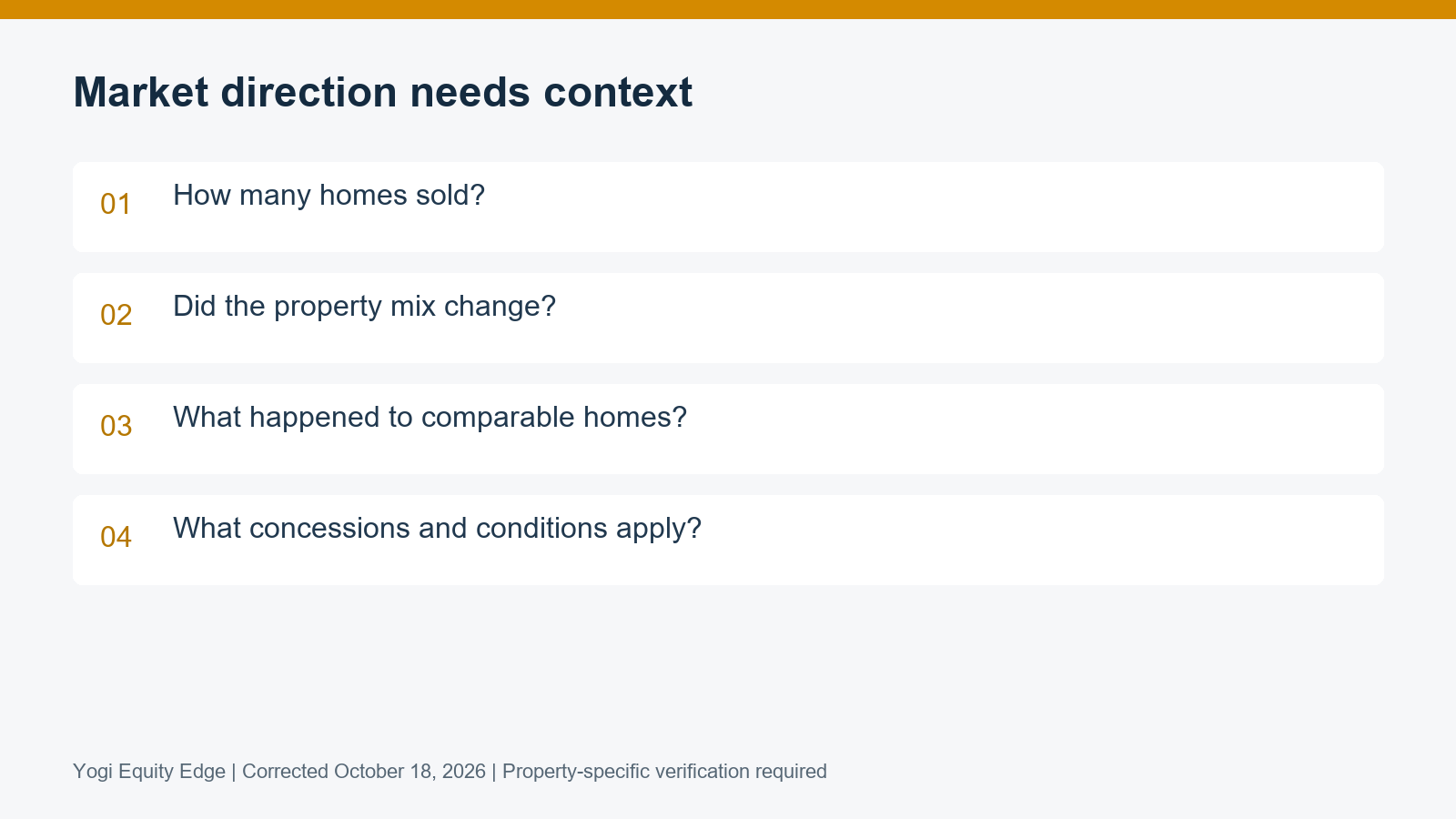
Changes in the sales mix can move the median; investigate comparable homes and concessions.
A change in median price is not the change in value of every home. It can reflect which properties sold. Before reading one area as stronger than another, look at the number and mix of sales, price changes on comparable properties, concessions and days on market.
Do not conclude that builder incentives caused a resale trend without evidence. For a real purchase decision, compare the builder’s complete offer with the competing resale, including financing conditions, upgrade costs, association charges and taxes on the finished home.
How to narrow the search
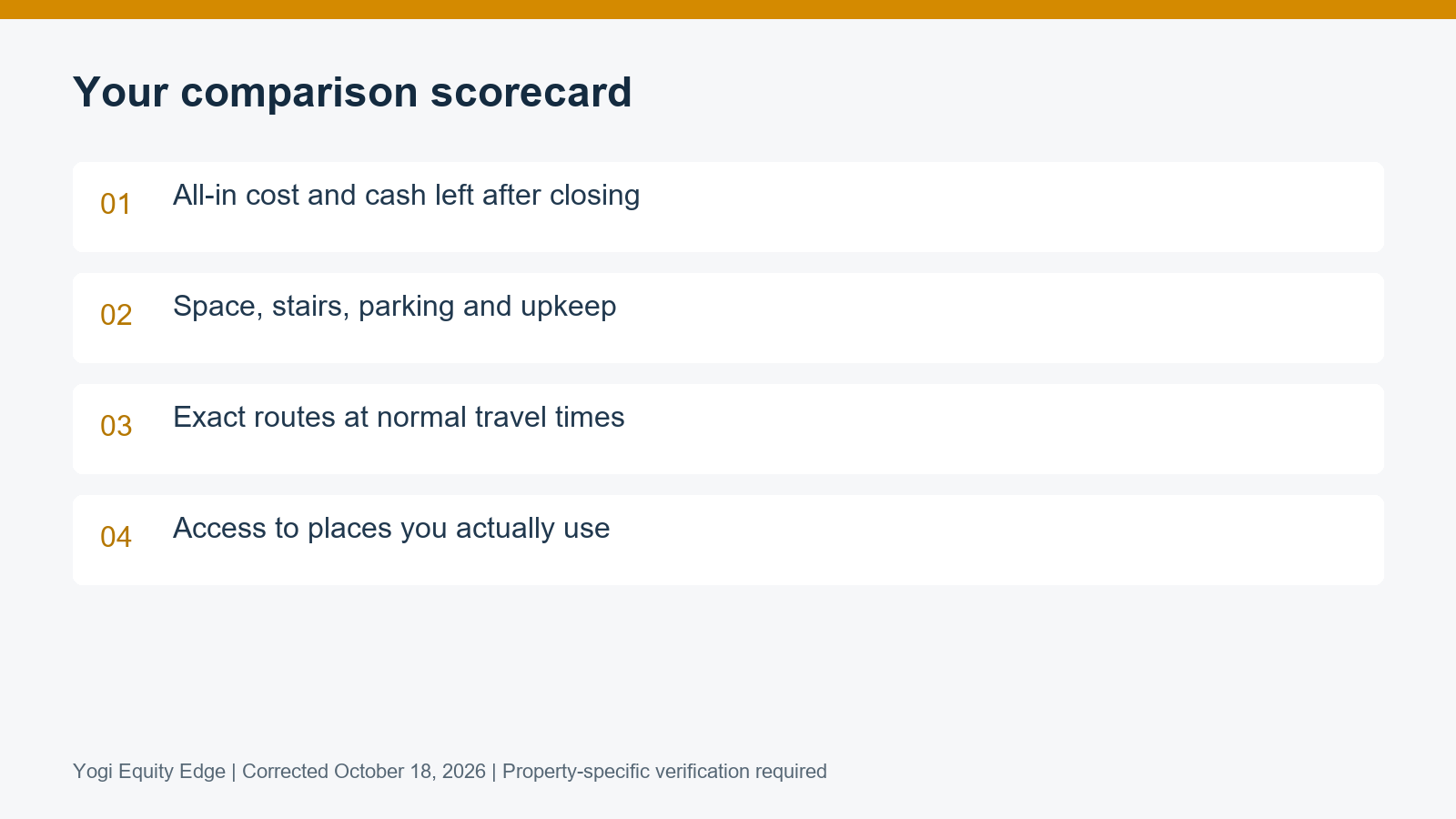
Score measurable property features and your actual routes instead of assigning universal best-fit labels.
Choose the tradeoffs you can actually measure. For each finalist, record usable space, stairs, parking, maintenance responsibilities, distance to places you use and total monthly cost. Visit at different hours rather than relying on an area’s reputation.
For a commute, start from the front door and finish at your actual destination. Test both directions at your usual times. Include tolls, parking and routine stops. Downtown living does not guarantee no commute; Dr. Phillips does not guarantee the best commute; working at a Lake Nona address does not make every home with that label equally convenient.
Set a time limit you can live with, and let the route test decide. A remote worker and a daily commuter can rationally choose different houses without either needing a neighborhood ranking.
Schools: check the address
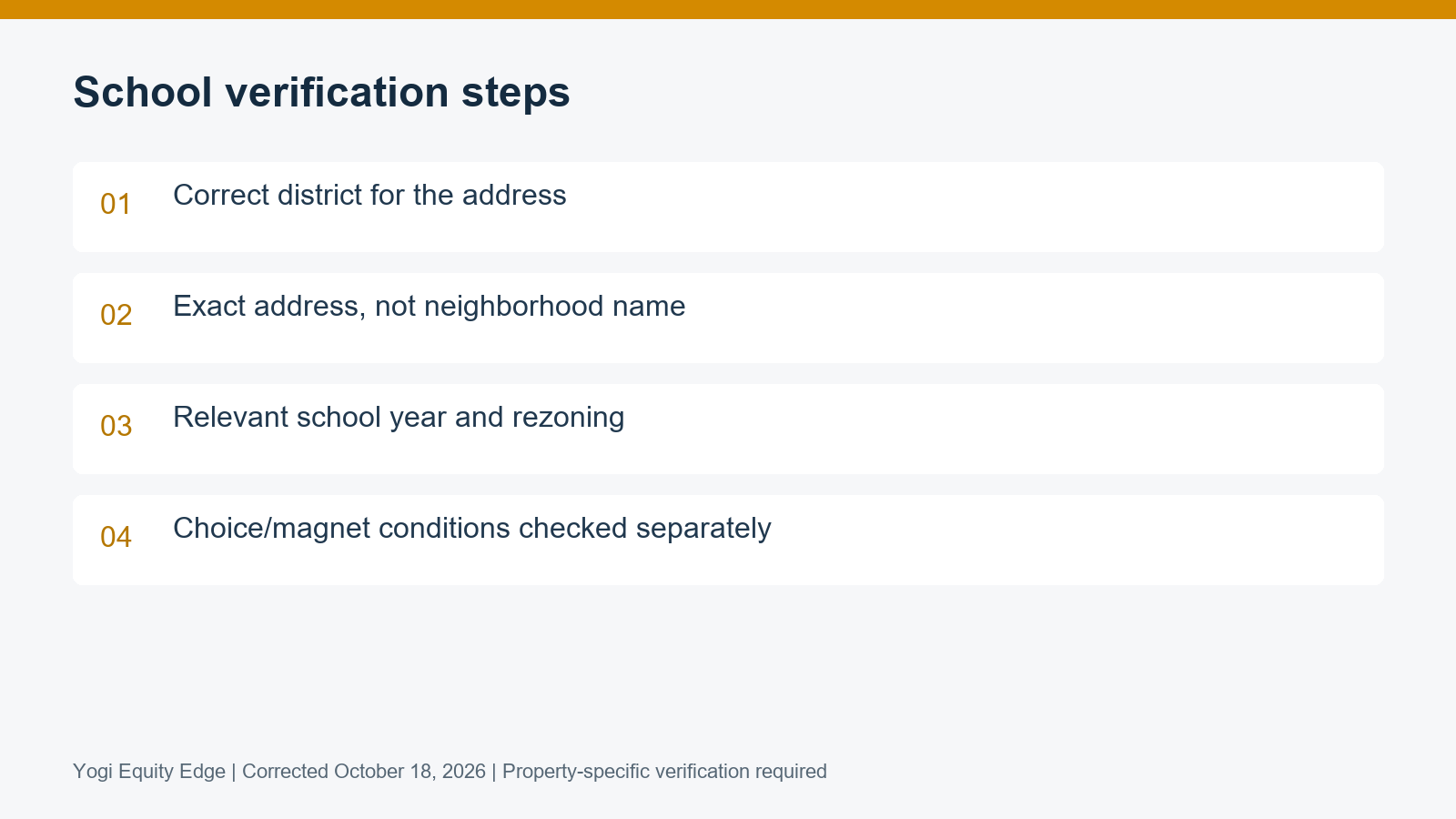
Verify the exact address, school year and rezoning information with the responsible district.
If school assignment matters to your household, use Orange County Public Schools’ official Find My School tool for Orange County addresses. OCPS determines assignment by home address and warns that current-year rezoning decisions may not yet be reflected in search results. Check the relevant year and any rezoning notices directly with the district.
For a St. Cloud address, use the responsible Osceola district rather than assuming Orange County’s lookup applies. Do not use a neighborhood’s name, Wikipedia or a nearby campus as proof of assignment. Magnet and choice admission can have separate conditions.
Read each school’s current official information and decide what matters to you. This guide does not rank communities as better or worse for families or assign a household to an area.
Downsizing: smaller can still cost more
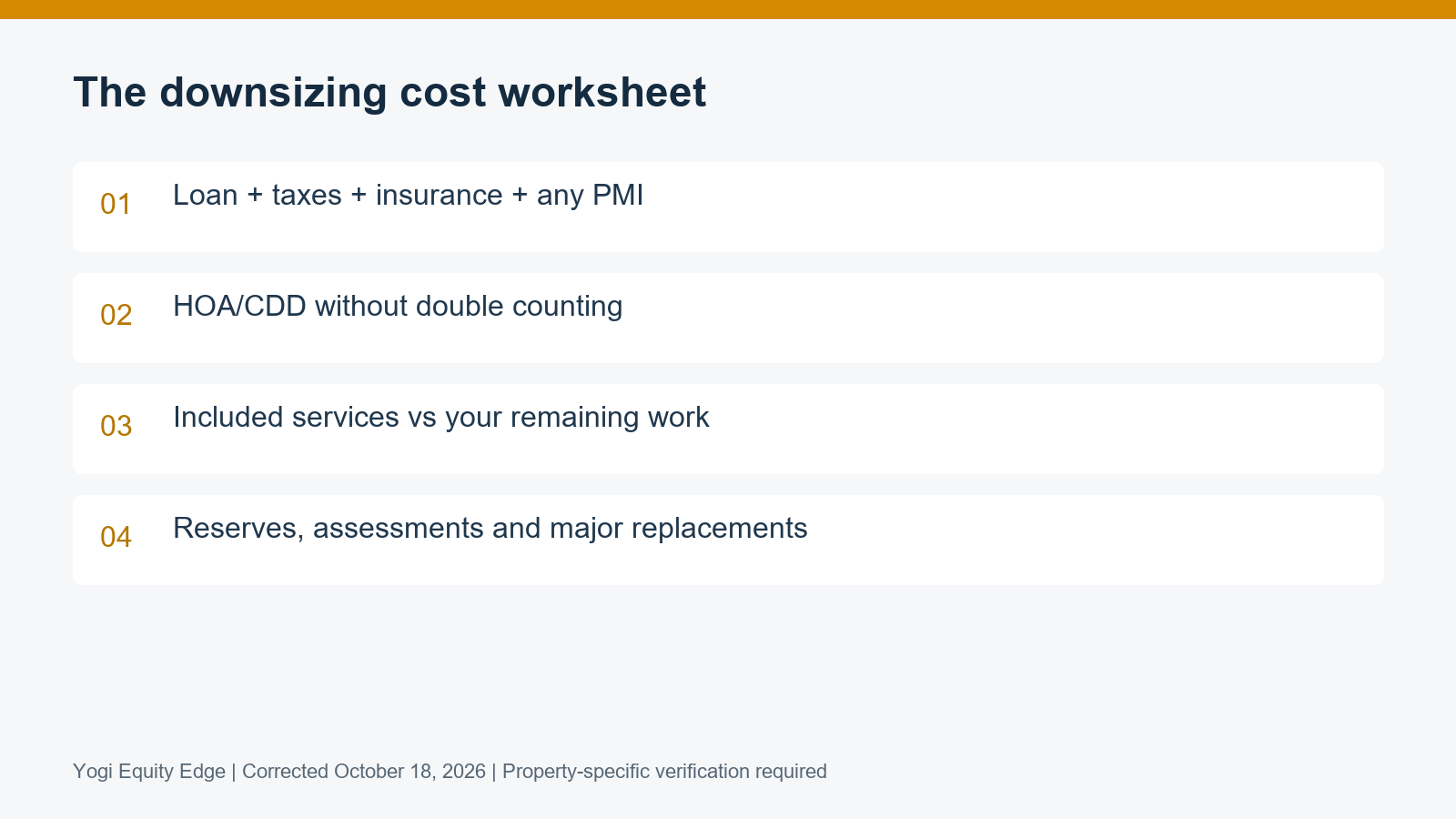
A smaller home is not automatically cheaper to own; compare services, reserves, assessments and responsibility.
Compare responsibility as well as square footage. A condo fee may cover services you currently buy yourself, but included services differ by building. Request the current budget, reserve information, meeting minutes, assessments, insurance information and any applicable inspection records before deciding the fee is good value.
For a detached house, include lawn, pool, exterior maintenance and major replacements where relevant. For either type, obtain a property-specific insurance quote and estimate taxes for your ownership. Cash from selling a larger home can reduce financing, but it does not eliminate recurring costs or the risk of assessments.
A conventional loan below 20% down may add private mortgage insurance. Include it along with principal, interest, taxes, insurance, association charges, applicable CDD assessments and a maintenance reserve. Avoid double-counting an assessment already included in the escrow payment.
Make a shortlist of two or three actual homes. Compare cash to close, all-in monthly cost, cash left in reserve, measured travel time and the responsibilities you will keep. Send me the addresses, your budget and the destinations you use most. We can narrow the choices using the numbers and features that matter to you.
Educational information, not individualized legal, tax, insurance or financial advice. Confirm property-specific figures and contract rights with the appropriate professionals.
Yogi Ganeshram | Real Estate Agent, eXp Realty LLC
yogi@orlandosgreatesthomes.com | (321) 217-4220